Subscribe to Guy's Podcast:
#464 What if the secret to living a longer, happier life has less to do with what we have, and more to do with how we live?
👉 **Work with me:** https://www.guylawrence.com.au/booking/
In this episode, I’m joined by Marcus Pearce for a fascinating conversation about longevity, happiness and what it really means to live a fulfilling life. Marcus has spent time exploring the Blue Zones of Sardinia and Icaria, where people are known for living remarkably long lives. What I found particularly interesting wasn’t just their age, but their outlook on life, the simplicity of their lifestyles and the importance they place on community, relationships and connection. We also explore how easily modern life can pull us away from the things that matter most.
From our constant connection to technology and information to the pursuit of more possessions, success and external validation. Throughout our conversation, we come back to something beautifully simple: the importance of being present, spending time in nature, nurturing meaningful relationships and finding purpose in the everyday. It certainly left me reflecting on what it means to live well, rather than simply live longer. Because perhaps the secret to a fulfilling life isn’t about adding more, but appreciating what’s already here.
If you enjoyed this podcast, you may also like: Learn The Wisdom From 200 Of The Most Exceptional People | Marcus Pearce
Libsyn Audio Version►
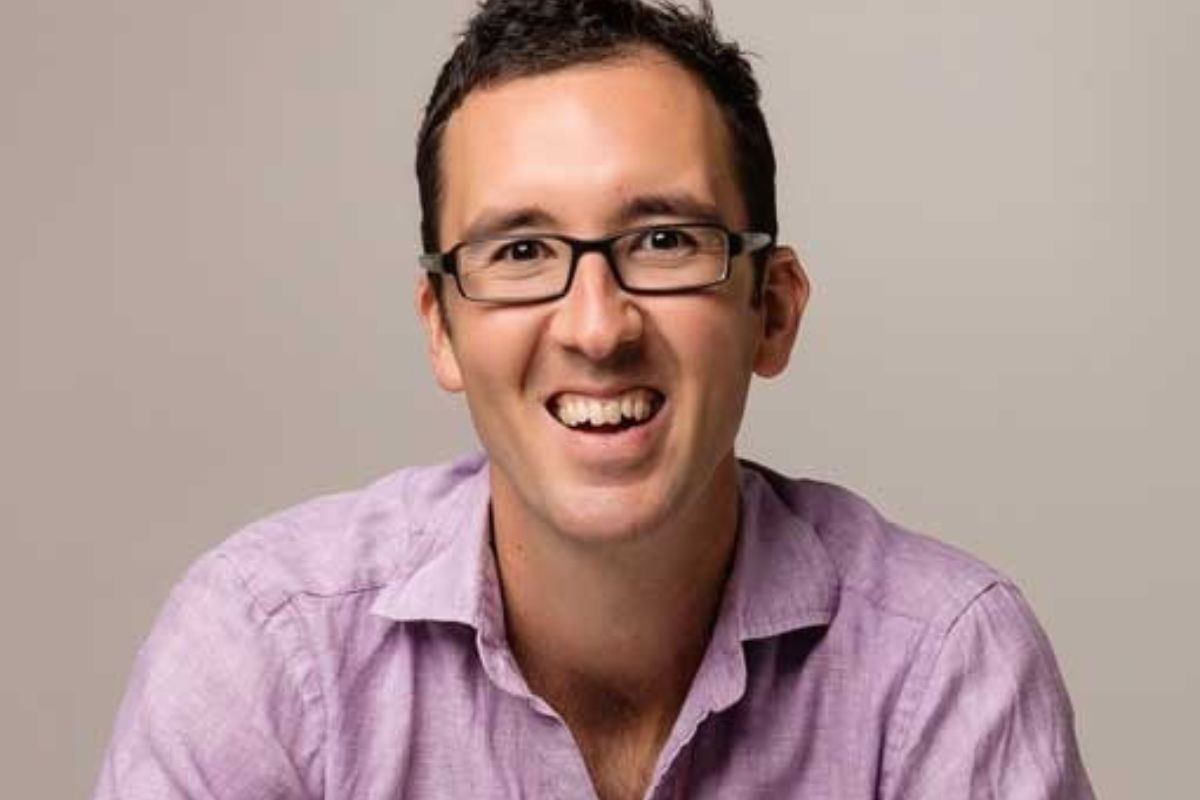
About Marcus: Marcus Pearce is a former smoking, binge-drinking journalist, radio and television producer, Marcus’s media career included time at Leader newspapers, Sport 927 and SEN 1116 before concluding at Channel Nine and The AFL Footy Show in 2006. After meeting his now-wife Sarah in 2005, he slowly switched from sports media to health, wellness, and personal growth media. Sarah, a chiropractor, was the catalyst of Marcus’s health transformation from a Red Bull-guzzling, meat-eating smoker to a ginger-tea sipping teetotalling vegan, to somewhere back in the middle.
In 2013 Marcus and Damian Kristof began the podcast 100 Not Out: Mastering the Art of Ageing Well. In that same year, Marcus joined The Wellness Couch podcast network as the Executive Producer of events including The Wellness Summit. Since its inception, 100 Not Out has recorded more than 400 episodes and conversations with some of the planet’s most graceful agers, high achievers and interesting people. 100 Not Out has received almost one million downloads, whilst The Wellness Couch network surpassed 11 million listens in 2020.
In 2014 Marcus and his family moved to northern New South Wales. With Sarah now a stay-at-home mum, the time had arrived for Marcus to create the Exceptional Life Blueprint framework. He created an online program and began sharing his insights and trainings both digitally and in-person.
How to Contact Marcus Pearce:
marcuspearce.com.au
Timestamps
00:00 Humanity’s Future: What the World’s Longest-Living People Know That We’ve Forgotten!
00:49 Change Your Energy, Change Your Circumstances
05:41 Meet Teresa: 96, No Washing Machine—and She’s Never Seen the Ocean
08:53 “Did You Ever Get Stressed?”—The Question the Elders Barely Understood
14:24 Why Nature May Be One of the Missing Links to Longevity
18:29 Presence May Matter More for Longevity Than Diet
20:13 Why Marcus Stopped Wearing a Watch
21:45 The Ikarian Longevity Secret That Had Nothing to Do With Soil
28:27 The “Apprenticeship of Suffering” and the Wisdom It Leaves Behind
30:39 LIVE IN FLOW — Experience This Work in Person
31:27 Join the Dots: Turning Trauma Into Wisdom Instead of a Lifelong Story
33:09 Why Some Cultures Refuse to “Move On” From the Dead
39:19 Is Modern Spirituality Missing the Power of Community?
41:23 Why Blue Zone Elders Seem Less Afraid of the Future
45:05 Is the World Really Pessimistic—or Is It What You Consume?
47:24 Why You Know More About World News Than Your Own Family
49:38 How Marcus Makes Big Decisions Without Certainty
55:42 What Happens When You Ignore an Idea That Wants to Be Born?
59:23 The 3 Ingredients Marcus Says Matter Most for Longevity
Referenced in This Episode
– Dr. Ivo Parisi
– Zach Bush
– Dr. John Demartini
– Martin Seligman
– Nelson Mandela
– Bronnie Ware
– Your Exceptional Life by Marcus
– The Creative Act by Rick Rubin
– Do the Work by Steven Pressfield
– Sardinia
– Ikaria
– LIVE IN FLOW
Transcript
Marcus:
Here is someone that’s never seen the ocean, has nothing, but feels like they have everything. The world feels so big and overwhelming and riddled with anxiety. They seem to have a deeper faith that everything’s okay, like there’s no mistakes. Life becomes more unforgiving if you don’t live it, especially as you get older. There’s this great story that Zach Bush, and he says, “I’ve got it. I’ve found the secret to longevity in Ikaria, the Greek island where people forget to die. It’s the soil.” And the locals are sitting around and they’re going, “I’m sorry, Dr. Zach, you are wrong.” Said, “The secret to longevity in Ikaria is-
Guy:
Guy here. Just a quick one from me before we jump in this amazing podcast with Marcus Pierce, because what I love about this, it’s so practical and grounded. If you listen to my channel on a regular basis, and we’re exploring all sorts of phenomenal topics, but ultimately there’s so much wisdom in here, I just truly hope that you enjoy, listen, and take it on board because, uh, uh, these conversations are very dear to my heart. The reason why I’ve jumped on here as well is that I am actually a huge believer, firm believer, if you change your energy, you change your circumstances, and that’s where it starts from. But we’re always trying to change our circumstances and hope that it’s gonna change something within us, and we need to flip it.
I’ve seen way too much. I’ve explored this work for a long time. I’ve been holding space for a long time, and it… for me, it’s time. I’m opening up space online. I have this ability to truly channel this incredible divine energy and hold space for other people, while that energy can then support somebody else’s energy, and through in turn, they can receive whatever they need to do from their own true higher selves as well. And from that, many amazing things can happen physically, mentally, emotionally, and spiritually while we’re on this beautiful experience called life. Anyway, I’ve opened up spaces. I’m making them small, intimate, and only a few available at the moment as I start to reorganize my schedule and that. So if you wanna get amongst it and come and join me, meet me in person, we get to hang out and explore this energy work together as well.
There’s a link below. Come and book in a spot, and hopefully I get to meet you somewhere in person as well, from anywhere in the world, not just in a physical space or in a retreat or something. Anyway, much love from me. Enjoy this episode with Marcus. It’s phenomenal
Guy:
Marcus Pierce back in the house. My man, welcome, welcome, welcome
Marcus:
Oh, Guy Lawrence, my man, it is so good to be back with you. I can’t believe it’s been years since, uh, I was last on your wonderful podcast because I feel like I speak to you, uh, regularly enough. You are one of those great human beings that keeps up social connection by calling me more than I call you, and I think I apologize every time, uh, for not calling you often enough. But I love our friendship. Um, I love you as a human and what you stand for and your wonderful family and, uh, yeah, great to be back with you, great
Guy:
Oh, thank you. Well, you have twice as many kids as me, mate, so that
Marcus:
Yes,
Guy:
so we gotta, we gotta factor these things in, that’s for sure. You know, i- interestingly enough, the last time we spoke was during COVID on the podcast, um, and we were actually talking about the media at the time, ’cause you’re somebody that, that worked in the media, and this whole narrative that if it bleeds it leads, and people love to drive fear just for eyeballs, you know? And that was a, a great conversation, very, very topical at the time. And, and I reached out to- I, I think last week, I just wanted to just, uh, how can I get Marcus back on? He’s just got back from, I believe, is this Sardinia this time or Icaria?
Marcus:
Uh, yeah, just back from Icaria and Sardinia. I’ve actually been to Sardinia twice in the last three months, um, running, running trips, as I said to you before we hit record. Been a very weird year. But yes, uh, just recently back from the European Blue
Guy:
Yeah. A- and I really want to dive into that today, ’cause I, I feel, as you know, my podcast has very spiritual topics around it. You know, I’ve talked about some very left of the middle conversations on here, that’s for sure. But for me, I’m always curious, I’m always open, and I love grounding things into everyday reality, ’cause y- we, we can get swept up and caught up in, in certain things that are actually keeping us distracted from the here and now. And one thing from many conversations we’ve had about the different trips, ’cause I’ve done a, a, a lot, a trip in Sardinia to the Blue Zones, God, near, uh, eight years ago now
Marcus:
Evo before we were. You were the catalyst. You were, you were my reconnaissance.
Guy:
you know, a- and talking about presence, right? When you go there and people that are in the moment, and, uh, probably half of them wouldn’t even know what a podcast was as soon as you get up into the villages in the mountains.
Marcus:
Yeah
Guy:
l- where do we start, man? Like, what, what have you… What keeps drawing you back to these places?
Marcus:
I know exactly where to start based on what you just said. So for context, um, Guy took a group to, uh, Sardinia back in, what was it? 2018, Guy?
Guy:
yeah
Marcus:
Okay, and, and, and your host, um, was Dr. Ivo Parisi. Um, we’ve been kind of stalking Ivo as well, and in 2020, uh, Damian and I, my co-host on my podcast, were due to take a group to Sardinia. That got canceled with COVID, so our first time wasn’t until 2023. But just recently, Guy, um, and you ask where do we start? We were in a little village called Ascolca, uh, with a little old lady called Teresa. She’s 96 years old, still wakes up every day, uh, at, at about 6:00 in the morning, will go down to the forest and chop her own firewood and bring it back and light her own fire, and her husband died 10 years ago, and she’s never had a washing machine, never had a dishwasher.
And get this, she’s never seen the ocean. She has never ever seen the coast, has never put her foot in, her feet in the sea, and has absolutely no desire, desire to ever leave her village of 1,000 people to venture to the coast of Sardinia. that interesting around making the world small, whereas you mentioned a previous episode around news consumption and media consumption and everything is about how big the world is and all of the war and drama and bleeding happening all over the world and on our own back door. Um, the world feels so big and overwhelming and riddled with anxiety, and then you go to a little village in the middle of nowhere in Sardinia, and they have no desire to go the 100 kilometers to the coast and see the ocean. 96 years, has never seen the ocean and doesn’t care to!
Guy:
Talking about owning your own power or like, you know, that’s just standing it, yeah
Marcus:
She’s so… And she’s got no money, and we gave her a gift. We gave her a gift, uh, of a tea towel, an indigenous design tea towel, and she said, “I don’t want it. I’ve got so much stuff.” She said, “I haven’t even used my dowry from, like, 70 years ago.” And she takes us into the living room where the dowry, like, the, the linen and so on is, and even in showing us her gifts, uh, she breaks, like, a teacup that she’s never used, that she’s had for, like, 60 years, and she doesn’t even care because she’s got so much stuff. And to this point, we are so consumed by material possessions, uh, and here is someone that’s never seen the ocean, has nothing but feels like they have everything, and wow, I think there’s a big lesson for life right
Guy:
Wow. Holy shit. I got goosebumps as you were sharing that, mate. ‘Cause I, I remember when we did our Sardinia trip, it was like day four or five, I th- I can’t remember if it was six or seven-day trip that we did, and each day we were kind of working our way in to the mountains and experience it. And, and like you said, Dr. Ivo, who, who was our guide at the time, he’d built it up for s- like day four, day five, we’re gonna meet the elders, the centenarians, you know. And, and he, he planned it out beautifully. And when we got there and we- they were just sit- hanging out on the, like the little street corner with their little, um, little coffee and stuff, and they were, they, I think they were playing dominoes at the time, and, and right before.
And there was a husband and wife and yeah, and he was like 93 or 94 at the time, and his wife was a few years younger. And we were- I remember asking him, “Did you ever get stressed?” ‘Cause now he couldn’t speak English, so Ivo was interpreting. But Ivo had to try and explain what the word stress was because he actually had no concept
Marcus:
Yeah. I mean, this is something that I find really interesting because, um, this might be our first fight, Guy. I’m not
Guy:
Yeah
Marcus:
it could be our first disagreement. But one of the– to your point, one of the, one of the gentlemen that we see regularly, I have a feeling you may have been in the village of Sayulo when you were
Guy:
I saw.
Marcus:
your memory
Guy:
Mm-hmm
Marcus:
Um, and, and there’s a gentleman there, Giovanni. Giovanni’s in his early 90s. Um, he lost his wife when, when she was 56, so he’s been a widower for whatever that is, you know, 35-odd years. But, but Giovanni grew up as a, as a shepherd boy. He was a shepherd boy from six years of age, never went to school, um, only learnt to read and write as he, in his adult years. Life was very hard. He lived– they were subsistence, you know, you just– you live to, to– well, you eat to live, but it’s, they, they actually really didn’t have much at all. Life was very difficult, but they’re very happy. And so the concept of stress, you know, often we leave these places and think, “Well, I’m really happy living in Australia.” Um, but I don’t know that it’s a stress-free life. I tend to feel that as people get older, the people that age well, have, um, a perspective, call it a, a reflection, but they have a perspective that they’ve conquered so much challenge in their life they feel what we might call stress-free in their elder years, like in their 70s, 80s and 90s.
But I know the same people of the same will tell stories of some of their biggest achievements were, you know, one guy, um, uh, little Paul, he says he’s 102, and he said one of his best achievements was moving to Germany and working there six months a year, might have been as a concreter or a laborer, so that he could make money, save enough money to come back to Sardinia, and then start a grocery store, and then have this stable life in Sardinia. Now, you and I both know that if we did that, that’d be very bloody hard. That’d be a hard life. Six months away from the family, making hay whilst the sun is shining, so that we can then create more of a life when we’re back home. So many people in the modern day can still relate to that story. Um, but I think when we interview the elders, they’re just very fulfilled by that achievement, hard work, and dare I say it, boatload of stress they had to
Guy:
No, I, I actually agree with what you’re saying with all of that, you know? And I th- I think in our modern society, and the interpretation of stress can be swayed as well, especially with the different demands that are very different to the simplistic life, to the technological life, and the way we kind of, we, we tend to live now and keep up with the Joneses and everything else. Yeah, ’cause the perception of it, I remember seeing his hands, man. They were like shovels, right? And he was a guy that grafted. He, he used to get up and, you know, the first thing he did was milk the goats at 5:00 AM every morning. He’d go down, tend to his goats, get the milk, and
Marcus:
Tough life.
Guy:
it was hard, but he was so connected to it all, and it was just what he did. The perce- yeah
Marcus:
they learn to love it. That’s what they, they d- that’s what they’re really good at, I think, is they appreciate their lifestyle no matter how hard it is. Um, part of me feels like we haven’t developed that, I say it, spiritual muscle to really embrace, um, the toughness of some, some elements of our life
Guy:
Well, this is the conversation I want to unearth with you as, as well, is around spirituality, ’cause I, I d- f- you know, I’m in front of a lot of people, as you know, and I, you know, you just get a feel of where people are at and, and as, as you, you know, and I wonder what the interpretation of spirituality really is if you were to start to unpack it with many people, and then how is that actually translated and applied into your life? ‘Cause from what I witness a lot is a lot of people are living in their heads, and they are, they are fully invested in the mind and the head, but there’s a, there’s a disconnect into the tough moments, a dis- disconnect into, into discomfort, and actually, I guess the melting pot where, where the transmutation takes form in all these things.
So I’m curious from your perspective what that spiritual connection is like for people that, that l- live there, and what have you learned and bring back in? ‘Cause even when you, you, uh, like I said to you, um, you know, “Send me some dot points what we could talk about,” you came back with spirit, soul, and faith, and then suffering as a creator of optimism. And I was like, optim- as, then you got optimism as a seed for longevity. And I was like, “Holy shit, there’s a through line through all of that.” Mm. So
Marcus:
Oh, well, how long’s a piece of string, Guy? Um, because I tend to think that when, when people look at, and again, for context, you know, I’ve been going to the Blue Zones for 10 years, just about to go to Okinawa, which is the, like the last dinosaur Blue Zone, ’cause that, that won’t be a Blue Zone for much longer. But you look at these places and they have a great natural environment. Um, they are surrounded by nature, uh, which makes it a really easy line to draw that, you know, if we use, if we use the G word, God, just for a moment, they are surrounded in a presence that reminds them of how great life is or the world is.
It’s a lot easier, um, it’s a lot easier to– and tell me what you think about this. It’s a lot easier to feel great about the world when you can see the ocean, you can see big trees, you can, you can have bare feet on the earth, you can, um, be in the natural environment. It’s a lot harder when it’s concrete and glass, red lights, traffic, road rage, rushing, busy timetables, stress, and so on. So it doesn’t surprise me, um, that you look at these cultures that live great long lives and, um, they are surrounded by the natural environment.
Uh, and that is something that is an inconvenient conversation today because so many people don’t live in, uh, you know, country towns, regional centers, and so on. Um, but I know one of the biggest things that I’m most proud of coming back from the Blue Zones, as silly as this is gonna sound to some people, is actually planting a veggie garden. And that will sound so lame from a spirit, soul, and faith perspective, but if I asked any of the listeners, you know, how o- how often do you remind yourself of the absolute gift of life, that spirit, soul, and faith that you have?
How easily do you– how easy do you make it to explore? Do you have to sit in a corner and close your eyes for 20 minutes and meditate and find quiet and peace? Or can you look at a blade of grass? Can you listen to a bird chirping? Can you look at a rose blooming in your veggie patch? Um, because I feel like on a spirit, soul, and faith level, we’re finding it the more consumed we are by screens and that, that two-dimensional life, the harder it is, the harder time we are having at opening our, our hearts.
I don’t wanna say our minds, ’cause our, our minds are driven by the ego. And like you said at the beginning of the question, we are so consumed by it. But how– we are making it very hard to have a very open experience because we are so consumed by that 2D world, that tech and screen and so on Um, which is why I love your commitment to do what you do, Guy, because you run events and retreats and so on where you’re opening people up to a bigger life. Um, but yeah, because so many people are struggling with it
Guy:
1,000%. And again, I’m just agreeing with you
Marcus:
Fear not, thought we might be up for our first fight, but we’re not. We’re okay here. We’re
Guy:
It, it, but what I see is that when you open somebody up to possibility and somebody open up to a deeper connection to self and spirit and, and that a- that alignment and that, that moment starts to come, what seems to be happening is that then there’s a knowing you can’t un-know, and that knowing starts to relate to a deeper sense of wisdom from the experience and the knowing that you’ve just had, which ‘Cause if you’re thinking, you’re not knowing. They’re, they’re two very different things, right? So for me, bringing people together f- that’s what I feel like I’m contributing to my bit to humanity because once they have that, that connection point, then hopefully that’s gonna start to ripple in to actually start to reflect on the choices they’re making in their lives.
And I would challenge anyone, like, you know, if you go and spend a week in nature barefoot, out of technology, and just, like, ’cause all spirit is craving is presence at, at the end of the day, and our lives are set up that are demanding our attention and pulling us away from presence. Isn’t that crazy?
Marcus:
Yeah. And, and this presence, I truly believe, um, is a nutrient to our longevity and quality of life that far exceeds our macros and micros, uh, from our diet, and far exceeds, um, what it is that we might be, um, consuming from a knowledge perspective. So many people wanna the best diet and know everything, and I’m like, “If you’ve got no friends and you’re not present with people when you’re with them…” Again, look at the elders. Uh, they are so good at sitting and putting 100% attention on you. What everyone that met Nelson Mandela said is that he just had an ability to make you feel like the only person in the room, if he was in a room of thousands. Now that, we might call it a skill, but that sounds very mental.
I’m like, no, that is a state of being. is a heart-centered state of being, and that, I think, is what, most of us are yearning for. But the hard work to create that type of life where a lot of people feel totally overwhelmed by
Guy:
terrified by and perpetuate the problem. So when you start to unpack, and I’m thinking of everyone listening today, like, what elements have you brought into your life that have made you maybe even question what it means to be human? You know, the creation itself, your relationship to God, the universe, and how you start to bring those principles in, ’cause you can’t not go there and connect to all those people every time, and it should not change your life
Marcus:
Oh, absolutely. Um, the first thing I think about is time.
Guy:
Hmm.
Marcus:
So I don’t wear a watch
Guy:
Amen.
Marcus:
because the time, there we go. The time, that, that was after the first trip, was like, “Okay, I, I need to make it harder to know the time.” my clock on my MacBook is the analog because it used to be the digital, you know, in the top right-hand corner. Um, I don’t, it’s just so easy to know the time now, and generally the time either makes you anxious about the future or guilty about the past. You know, you’re feeling bad that you’re running late for something. Um
Guy:
I fucking love it
Marcus:
you know, so the time is, again, it’s so basic, but it’s so hard to be present when you’re thinking about the time. so when you’re with elders, they don’t give a stuff about the time. In Icaria, most people that have traveled to islands, whether it’s Fiji, even Byron gets Byron time, Fiji time, you know, you’re on island time. You know, Icaria have those T-shirts that make fun of the Nike, uh, or the Nike tick, you know, “Just do it… Because they really feel that if I , if I bump into a neighbor we end up having a glass of wine or two with some bread and whatever, um, whatever I- being present in that moment now is, that’s the gift.
Whatever I was going to do, a bill, drop something off to someone or whatever, I can do it tomorrow. There’s this great story that, um, Zach Bush, who I’m sure you’re familiar with and maybe listeners as well would be familiar with, he’s a medical doctor from America and he goes over to Icaria and he’s having dinner with a local family and he says, “I’ve got it. I’ve found the secret to longevity in Icaria, the Greek island where people forget to die. I’ve figured it out. It’s the soil. The soil here makes such robust and hardy plants so that the food that you consume is just power-packed with nutrition. That is it.”
And the locals are sitting around and they’re going, “I’m sorry, Dr. Zach, you are wrong.” Said, “The secret to, uh, longevity in Icaria is that we have an empty seat at the table at night hoping that a family member, a friend or a stranger, also known as a friend we haven’t met yet, will come and join us for the rich experience of people coming together and enjoying this beautiful food, you know, in a, in an environment of love and connection.” And that, to your point, Guy, is presence. And again, the basic, the basic activity of food bringing people together. many people work through lunch?
How many people rush their breakfast and eat it on the train or in the car or just don’t even have it? How many people have dinner in front of the TV? When was the last time people really sat down and enjoyed their meal with other people without one of these nearby or someone picking it up to find out a random fact that really doesn’t matter? When was the last time that we had a meal with no phones, no tech No interruptions and just the presence of the people around us. And again, it sounds so simple, but that’s a challenge that most of us are all working through at the moment
Guy:
Holy shit. You know, you made me think, ’cause I dropped in, and I le- I never listened to, uh, Diary of a CEO, right? Ever. And for some reason it came on my podcast when I was driving to Newcastle the other week, and I gotta find this game, uh, this guy’s name. Uh, we move. So this, they had this billionaire on, and oh, somebody’s gonna shoot me. Um, Diary of a CEO podcast. Anyway, check out the founder, because he, um, it was almost like Steven was grilling him about business and productivity and, you know, like, there’s this whole thing, ’cause this guy had sold his company for, you know, mid-billions, like, you know what I mean? Like, he’s a very unique individual.
And this guy, all he was doing was tying it back to spiritual philosophies and actually living this life from these principles. And I was really enjoying the narrative because y- you had two opposing narratives that were competing in some way. And I think we- there’s so much that we can learn in our own lives about what is it we’re actually doing all of this for, and what is it that truly matters and what we start to bring it back to. And then the rest comes from that. But we, we seem to be caught up in this, you know, the doing and the, the s- the state of c- consuming and having before we get to the being. And-
Marcus:
But, uh, part of me doesn’t have a problem with it either, because a part of me feels like on an evolutionary level, this is how we learn how to live. Like, part of me wonders, wouldn’t it be, you know, my daughter’s 16 and, uh, she’s, she got her, uh, her first smartphone when she’s 16, and I said to her the other day, ’cause I can see her, her screen time, I said, “Whoa, Maya, hours and 17 minutes of screen time. That’s, that’s pretty wild.” And she was mortified. And she’s like, “Oh, my gosh.” So she had a day off her phone.
Guy:
Ah
Marcus:
for her, her screen time, it’s largely WhatsApp, talking to friends, and so on and so forth. It’s not doom scrolling, as we might call it. But she was mortified, and a part of me really loves this because she’s learning about what we might call conscious behavior or so on and so forth. But we all know that in, in our 20s, we are striving for achievement. Like, we’re looking to find our space in the world and almost as we then move into our 30s and, uh, and so on, particularly in business, it’s all around performance and efficiency. And if we’ve got children as well, we’re squeezing time in, and everything’s around the calendar and fitting it all in and trying to win at everything and, but feel like we’re spinning plates and they’re dropping and of learning that our self-worth is not wrapped up in our achievement of so many things. And then hopefully, in our 40s and then moving into our 50s, I’m 45 right now, and you’re in your early
Guy:
Mm.
Marcus:
Guy, like you actually begin to… Can we swear on your podcast?
Guy:
Yeah, man.
Marcus:
Yeah. You, you, you generally speak to people that turn 50 and beyond, and it’s all about giving less fucks. Like, you actually are more like, “Okay, like I’ve had a go at the ambition thing and, like, defining myself in society by status with cars or homes or jobs or, you know, you and I are in the podcast world, podcast guests, or you interviewed that person. Well, I interviewed that person.” Like, honestly, who cares? Who cares? Um, and this is kind of the piece of learning how to live that I love, so that when people look at elders in their 80s and 90s and 100s and they go, “Oh, they’re so present and they’re so calm or relaxed or whatever,” I’m like, I don’t think that was the version.
Like, when that 104-year-old, they weren’t like that when they were 44, and they had mouths to feed and jobs and maybe they were building a home or they were just trying to survive or whatever it was. And so a part of me feels like there’s a dance of life, uh, that has many chapters. Um, and I think as individuals, we need to know when we are ready do the hard work.
Even if we don’t feel ready mentally, we have to know in our heart and soul, which is why I love your work, Guy, ’cause you help people recognize that time to do the hard work, even if you don’t want to. Like, it’s time. I think we’ve gotta be comfortable in the… And again, you’d be better at speaking about this. When it’s time to take that quantum leap into the next evolution of your life, to love it. Don’t expect to be like, “No fear, this will be fun.” Go in shitting yourself, but recognizing that it is the most important work that you’ll probably ever do moving into that next phase of your
Guy:
It is the most important work you’ll ever do. I feel where when I reflect upon and I agree, like I’ve been someone who’s built a company through the supplement industry, you know, and this striving and this achieving. But what I find fascinating, like just on reflection of my own journey, a lot of that fuel was coming from suffering, just unconsciously,
Marcus:
Yeah.
Guy:
There was unresolved traumas. There were unresolved things that I couldn’t even identify with, that I didn’t even have words for because I hadn’t connected.
Marcus:
doesn’t that make those unresolved traumas, which no doubt are resolved now, doesn’t that j- just show the purpose and acceptance and appreciation of those traumas
Guy:
There’s,
Marcus:
created that chapter of your
Guy:
yeah, there’s a wisdom that’s come from that, that I would never take away. Even though at the time I, I want to hit an eject button because I feel so lonely, so miserable, so depressed. But c- coming through that and coming out the other side and reflecting back i- in all that, you go, “Holy shit, that’s actually I can see that now.” That’s like almost like the apprenticeship of suffering to have some scars on your back to, to then pass that wisdom onto others because you’re trying to support them, right? So for all of that in, in total, it, I mean, I don’t even know if there’s an answer to any of this really at the end of the day.
But I th- I, it’d be like I wi- for me, my hope and dreams are that the work and the understanding that I now know is more available for people if they choose to, to step into that or through that, through what I’ve experienced. So, so there’s opportunity there. Because I remember going through a period of life where I was just like, like a coiled spring ready to do anything. You know, I was like, yeah, uh, you know. But like they say, you can motivate an idiot, they just do dumb things faster, right? And, and, and to a degree that was me because I just didn’t know where to turn. I didn’t know what was gonna support me in that, that inner journey, and not even knowing that this really existed to a degree.
So, you know, and, and that’s what drives me and my hope is, is that people through, through the, the pain that they’re in, they actually start actually taking these things on board and actually applying them in their daily lives. Because it doesn’t all have to be about striving and, and avoiding what’s trying to catch your attention within yourself. I’m standing here right now in Lake Taupo in a beautiful retreat space, and there’s a vast difference between an intellectual experience and passive listening to a fully embodied lived experience, ’cause that’s what retreats can do. They can help you land, start to truly reconnect to yourself, to others, to nature, and to spirit as well.
There’s so much in it. That’s why we created Live in Flow, and that’s why we are so passionate about getting this work out there and bringing people together. If you wanna find out more when our next retreat or event is coming up, just check out the link below. And now, back to the podcast.
Marcus:
But I think, I think, uh, again, we’ve known each other for well over a decade, and so have had many conversations about this. But I think, uh, it’s so important to join the dots of your life, and you can only really join the dots the past. So to look back and really, Socrates said the unexamined life is not worth living, so I’m like, “So we better get examining our life.” And it’s so important to really spend time going, “Okay, so that happened in my life. That was traumatic, but what were the blessings?” Um, uh, blessings in disguise, and then they become actually more apparent over time.
Um, how do we put the pieces of appreciation and acceptance from those challenging times together so that, I don’t wanna say so we can move on, but we can move up, we can move on to the next level of our life experience, truly grateful for the things that occurred in our life. That’s where, I don’t know about you, but I don’t have a lot of compassion for the story that just gets told for years, which become decades, and the story becomes bigger and worse. And all of a sudden, it’s the headline that’s taking over the whole newspaper, and it’s a special edition lift out of this whole traumatic experience that happened. Part of me is like, if you could just process it and move on to the next, like, that’d be so.
Guy:
I, I, I have no tolerance, honestly. Like, I, I can feel empathy for people, and I understand, and that that’s okay, and if you’re not ready to let go of it yet, that’s okay too. I get it. I’ve held onto stories in my life for, for, you know, certain periods of time until you feel ready to take the change. But when you’re ready, then we can look at it. When you… Y- you know? And, and this is how you do, ’cause no amount of story is gonna, is gonna get you moving through it to come out the other side with what you speak of
Marcus:
yeah. So, so then there’s some tempering on this because I know we speak a lot about death in, uh, when, when we’re with the locals in, in the European Blue Zones. Death comes up a lot and loneliness. But death, often if they’ve lost a spouse, um, or a child, uh, they don’t want to not talk about the, their, their dead relative. They wanna talk about the wife that they loved for years or the husband that they miss or the child that they wish lived, you know, a full life and so on. In, in Australia, I’ll just talk for Australia, but we kind of are expected to move on and sweep it under the carpet and just kinda it in a box and not, not go there.
We don’t like to process our grief very well. Many people suffer in silence because we don’t have a culture of actually, um, recognizing the dead members of our lives. Most people wouldn’t know that Halloween is about celebrating the dead. Um, instead people think it’s a time to dress up as Chucky and get as many lollies as you can. Um, so I think there’s some elements of our life history, um, that, that do need to be told more. They need to be spoken more because we don’t feel safe culturally to talk about and grief and, and, and people that we’ve loved and lost and so on. So there’s definite learnings around what stories are worth telling and need to be told more.
I know in Icaria, which is very Greek Orthodox, you know, someone dies and there’s a, there’s a, a big gathering in, in the, in the, in the first 24 hours and then there might, there might be something another three or four days later and seven days later and then there’s another thing 30 days later and then it gets smaller, but there’s a thing 90 days later and then every year, every 12 months, there’s a commemoration of the person that passed away. Um, sorry if I’ve butchered the facts to our Greek Orthodox listeners, but there is a never forgetting the dead culture.
Guy:
Mexico?
Marcus:
they are Yeah. Yeah. Absolutely. And that’s, that’s exactly what we miss in terms of our stories. Um, I think we’ve gotta be mindful. When I say, you know, I’ve no compassion for the story that it gets, gets bigger and
Guy:
Of course, of course
Marcus:
I temper that with, with certain elements that, uh, but at the same time with grief, I know I have, uh, you know, I do some one-on-one work and I’ve often had clients that have been grieving for a partner that has died and at some point it’s a difficult conversation to have, but there’s an element of one needs to create a new identity to move on into the next phase of their life. I was just talking to a lady the other day whose husband died two years ago, and she didn’t wanna say it, but she was saying it.
She was like, “It’s actually been one of the best things ever because it was time for him to go. It was time for me to like stand on my own two feet.” In many ways she’d been living in the shadows of her husband and she was a very different woman to the one that she is today, where she’s actively engaged in the community and doing things- for her and so on. And so, you know, again, people don’t like to talk about this, but these are the conversations that we don’t do so well culturally, but, um, they probably need to be told more often
Guy:
It’s like getting the clothes out and you’re airing it out and you, and you’re just liberating that stored energy at the end of the day, you know? It’s a lot to manage and hold, and it can feel like it can be crippling. Y- you know, and it’s, it’s not, certainly not to be not compassionate. You know, I’ve certainly had people close to me that have lost partners and, and friends that are, like, suddenly and, and it’s a process, without a doubt. And I, I’m intrigued as well, when you were talking about that with Icaria, d- does, does everyone… how many people are on the island, and does everyone know everyone, and when they’re out celebrating?
Marcus:
8,500 on the island. Um, and I always like to think that they do, but no, even just on our most recent trip, which was our seventh time over there, you know, we’re on the, what you would call the west side of the island. It’s kind of broken up into thirds. But the west think that the east side of the island live where, where there’s more population on the east, and, um, and, and the west think the east are way too fast. You know, they’re a bit more… It’s where the capital is, Aigiorkiti. When I say capital, it’s probably like 4,000 people you know?
But it’s, it’s a bit faster there. Uh, whereas where we are, which is where National Geographic were based for all of their research, it’s very slow. Very slow. But even still, over the last 10 years, there’ve, there’s been development there where we’re like, “Wow, Nas is really, the village is really growing.” Um, but there’s, it’s not as much as everyone knows everyone. But I would say, I know in Australia, uh, sorry, well, in Melbourne, we say you’re only a few steps removed from knowing everyone. You probably only have to speak to one person in Icaria to then Connect everyone on the island. Um, e- even, even, so you may remember, Guy, there’s a restaurant in, in Byron, Kuzina.
Guy:
rem- yeah, I remember that well. Yeah
Marcus:
Right. So, so Phoebe’s family is from Icaria, and just recently we’re going for a walk in a village, a village called Christo, and, and, and the lady, Arido, takes us for a walk through this goat track that y- you’d never know, right? And we’re walking essentially through someone’s vineyard, and there’s a guy there, Pedro, who, you know, this lady knows and they’re talking. And, um, I had found out that, that Arido knew the Tunis family, she knew Phoebe’s mum, and then Pedro ends up knowing Phoebe’s mum as well.
And we- so we’re literally just, you know, I’m a guy from the Byron Shire talking about a Greek Icarian friend of mine, and I just mentioned it to one person, and then they both knew that family. And so that is very much Icaria. You only have to speak to one person, I think, and the whole island would effectively know each other. Um, but that’s very different to Sardinia, ’cause that’s 1.6 million people on the island of Sardinia, but it’s only 14 small villages that are the, quote-unquote, Blue Zone.
There are definitely other villages that have a longevity profile. Um, but you know, that social side of, of, of longevity is quite interesting, and I think it’s very connected to spirituality. ‘Cause I’m not sure your views on this, but the modern-day spiritual kind of movement feels very individual. It’s all like finding yourself. Um, uh, but then at the same time, you know, we’re all connected and there’s a greater being. And, uh, I really feel like there’s a lot of spiritual growth that can be experienced in communion with other people. So
Guy:
Mate
Marcus:
public spirit, um, h- you are who you hang around, so who are you hanging around? What are you talking about? And then you connect food with that. You generally have deep and meaningful conversations when it’s over good food. You know, so yeah, it’s a, it’s an interesting.
Guy:
Well, that’s what we aim to bring at the, the retreat. So when you spend five days together, yes, you got the processes, yes, you connect, but it’s the conversations and the meals and the, the opening and the, the deep connections that come from that. And, you know, nothing is more heartwarming when they kind of like find their tribe to a degree, that people have all had their, their stuff they’ve gone through. They’ve, they’ve stepped in, they, they’ve owned, taken ownership of, of themselves. But the, the connections I think are critical for, for that, that, that, that drive compassion, that drive kindness, that become– make us become more thoughtful and, and less, uh, less selfish and more selfless in, in terms of our acts and, and things together as well that we’re doing on that.
What are they– what are their then interpretation of life, death, what happens through that? Is there, is there an essence of … You know, ’cause what’s happened with me on my journey, the, the more I’ve opened up to this work, the more it’s given me permission to let go of a lot of, I guess, incidental fears in my life and things and, and not get caught up in shit so much, you know? And, and h- to have develop a belief system that … And, and actually a visceral feeling that there’s more to this than I can even– my mind can conceive.
Marcus:
Yeah. Well, uh, what I’ve been, you know, pondering on lately is that, It genuinely feels like as, as we get older, there is an anxiety that becomes almost a pessimism around the state of the world, and everyone wants it to be like the good old days. Um, you know, for a lot of people in my generation, I was born in 1981, so a lot of people talk about the ’80s and the ’90s and, you know, we were the last generation before the smartphone and, you know, we’ve kind of been on both sides of the coin where we can see what it’s like.
And as we get older, we’ll probably think that it’s gonna be even harder for the youth of today, and we talk about, you know, they’ll never be able to buy their own home and cost of living and state of the world. And, you know, when when I, when I spend time with the elders, um, again in Europe, I don’t get the same sense of and pessimism around the future and the younger generation’s role in it. They seem to have a deeper faith that everything’s okay. Like, there’s no mistakes. And if we really have a faith around, and it doesn’t matter who or what you believe in, the faith thing is common amongst any belief. It’s like, what do you believe about the future? Like, do you get anx- anxiety when you think about the future?
Well, then your faith is somewhat limited if it does. Uh, because again, I think, uh, our mutual mentor, Dr. John Demartini, once said, “Anxiety is nothing more than missing details of the future.” then what are the missing details in your perception of the future that are making you anxious? Because when you speak to a lot of elders that don’t have that anxiety, it’s very, for me anyway, it’s, it’s very reassuring, but then it’s also very important to develop a practice where you don’t buy into anxiety that you either consume through, mainstream media or so on, or by other people’s attitudes.
‘Cause I’m not, I’m not nervous about the youth of today. I’m not nervous for them. I’m not worried about how’s my daughter going to create a life and have a career and buy a home and, and if, and if… Again, I’ve got four kids, but my, my eldest, you know, Maayan is, you know, entering the adult world. If she wants to come to me with any limiting beliefs around the future, I’ll just, I’ll, I’ll, uh, nip it in the bud pretty quickly and say, “We’re not buying into that mediocre belief system.”
I’m not getting stuck into, you know, money this and job that and so on and so forth. Because being consumed by that is what Seligman called a learned helplessness, and I don’t want any one of my children living with a learned helplessness. And there’s no doubt that the more we consume, the more learned helplessness we are infecting ourselves with, and we must all guard, uh, not just our own bodies, but minds and souls Um, with a defiance but also with a fierce independence that we are truly exceptional beings on every level. And when we can own that, then I think it’s a lot easier to live with more presence, a word that you’ve brought up, uh, regularly, um, calmness, um, but also faith and belief.
Guy:
Mate. Yeah, the, the, the fierce independence I think is something worth unpacking here a little bit more as well because the wor- I, I just feel like the, the, the current narrative, you know, even through COVID and post-COVID and that, like the world is not set up to create, make us optimistic unless, unless there’s a political agenda or something that’s going on that they want something. Yeah.
Marcus:
the world is not set up to make us optimistic, I’m, I’m gonna challenge that and go, “Is it your consumption of the world that is not set up to make us optimistic?” Because what is the.
Guy:
I, yeah, let me, I, yeah
Marcus:
I went for a walk together around Minyon Falls, or we went to the Brunswick Heads, you know, beach, and went to the river and sat down together and looked at the pelicans and saw turtles and stingrays and kids laughing and swimming with their parents, and that was our view. You know, if we were little Teresa in a skulka in Sardinia, and she was with her friends and family and so on and so forth, like, that’s her world. So what is our definition of the world? Because part of me wants to be consciously ignorant of the other 199 countries that I can do very little about. But small world, you know, my family and my friends and work and so on,
Guy:
Oh, no, I, I’m s-
Marcus:
be pessimistic
Guy:
no, no, absolutely. I’m speaking from a generalization ’cause m- I’m in that camp. I mean, I’ve … I gatekeep everything really, and, and I, I couldn’t be more grateful in my, in my life right now and my family a- and w- what’s happening within my, my, my perception sphere world, if you like. You know? That, that is something that I nurture, and, and I know what you r- repeatedly focus on, you become, and with your friends and everything that’s around you, it’s important. But from what I see, though, from being in front of the people, is that there, there are a lot of challenges and a lot of worries and a lot of consumption that we, we get pulled into that very quickly and very easily.
And it, it’s not hard, especially if you’re going through an emotional challenge or, or a traumatic experience that’s being held in the body, that is already perpetuating something. And, and then it becomes even more challenging to pull away from that because that, that underlying c- whatever’s underlying charge in your body is something’s being met from that while you continue to focus on the, the negative aspects of, of what’s going on on the planet right now. You know what I’m saying?
Marcus:
Yeah, yeah, you’re kinda having the trauma response to everything that’s happening. So when we say that, say, news consumption increases cortisol, uh, increases tension, increases stress, there’s a perspective that I’ve often observed, um, on our travels, but even just i- in Australia, is that it is far more important to be aware and know the itty bitty details of the news of our family and friends and community than it is to know the details of what’s happening in, in the world that we can’t control and influence. Most people know more about what’s happening in America or Israel or Iran than they do about their child or their partner or themselves. And so my perspective on our state of the world, our inner world, is how much time do we spend on creating our own magnum opus, our own news, our own headlines? Because we can create a headline in the morning, absolutely pumped for the day.
What do I want? It’s gonna be a cracker. Um, here are the three hacks to my great day. You know, I’m gonna move for an hour. I’m gonna hop in the sauna, get in the water, have a eggs and greens for breakfast, tell the kids I love them, whatever it is. But most of us, we wake up, turn- get the phone, turn on Instagram, see what Steven Bartlett’s telling us, see what Trump’s saying, you know? Get some random message about some chick in Estonia who loves you and wants her roommate to, you know. Like, it’s so random, but it’s so it’s got nothing to do with our life. I just feel that we’ve gotta create our own media. We’ve gotta create our own news. Um, and I, I tend to believe, Guy, quite firmly that unless you’re in an industry where you need to consume the news, um,
Guy:
do it
Marcus:
so much of it we just don’t need. so much of it we just don’t need, and what would happen to us if we were somewhat more uninformed? Um, food for thought
Guy:
That’s for sure. Last couple of questions moving on that I wanna touch on, ’cause we, we spoke about faith a few times. How do you live your life these days, and how uncomfortable can you be with being uncomfortable, like sitting in the unknown and insecurity? It’s c- you know, ’cause y- you’re an entrepreneur. You, you, you work for yourself. You, you, you’re doing many things and, and I’m always intrigued as well. Um, you don’t have the safety of a nine-to-five job per se or a pay packet and things like that. You got a family of four kids. You know, we’ve had these discussions in the past as well and, a- and how much of faith, intuition, age the, that are, that are kind of coming in, that are driving that narrative of your, your own internal headline right now?
Marcus:
Hmm. It’s a great question. Um, I’m torn as to how to answer it. Um- I definitely have a strong faith. Um, I’m, I’m wrestling personally at the moment, I haven’t, I haven’t shared this, but I’m wrestling personally at the moment as to how I would put that faith words. Uh, because I’ve always said that I kinda believe everything and everyone when it comes to faith. Um, you know, uh, whether it’s God, whether it’s Buddha, whether it’s Muhammad, whether it’s, um, a, a, a, a, you know, Hindu faith, whatever it is, like it doesn’t…
I, I just truly believe that there’s a bigger reason and a purpose for us living our lives than, than just the, the daily grind. So if you and I are a 1 in 400 trillion chance to be born, when anyone that remembers Look Who’s Talking and the little sperm just making his way down the superhighway of the Olympics of conception and wins the gold medal, you’re a 1 in 400 trillion chance to win that gold medal, which means that for us to be born and to live our lives, it’s gotta be for something and it’s gotta mean something, and there’s gotta be a reason for that.
Now, I’ve never really had an argument with an atheist, but if there’s atheists living, uh, listening, they’d have a response to that. Um, but I tend to live my life on that level of when I feel something in my heart, I’ve definitely identified that can feel my heart beat at a different rate, and I can feel, again, whether you call it God’s presence or something other than me, I feel it in my heart. It’s, um, it’s not a feeling, it’s an experience that I, I, again, I struggle to put into words. And that is, for me, a confirmation that I know that I’m on track. It’s an overwhelming sense of something else. And so when I’m facing big decisions, generally go to that place of, I don’t wanna say searching for, but checking in on my heart space.
And I know you’re very similar here in it’s the– we’re all pl- we’re all in a game of the heart. I’m never really concerned about the mind. If it, if I’m having to think through it, I’ve missed the first step because generally, once the decision is made, then I know I have the ability to think through things. Um, f- y- for example, take, take writing a book, for example. I’ll just share this very briefly, but I was doing a process with four clients, uh, called 180 Days to Live. What would you do in your life if you knew you were going to die in 180 days? Um, whilst I were doing that, this kind of overwhelming sense of, “Oh, Marcus, what would you do?”
My whole thing was, “Oh, I’ve got a podcast and an online program, and I’m a keynote speaker, but if I got hit by a bus, my kids don’t really know what I think on how to live.” So I thought, in 180 days I’m gonna wr- I’m gonna get up at five o’clock each morning, uh, have a green tea, and write a dog’s breakfast of a manuscript on what Dad thinks on how to live a life And that started back in 2016, and then the book, which was version 14, came out in 2021, and that was all because of a sense, a spiritual sense, whatever you might wanna call it, of actually bringing that into the world.
I had to think through subheadings and word counts and stories to tell and so on, but the overwhelming experience of the heart is what drove the project. And I think when you’re a one in 400 trillion chance to be born, you can’t figure that shit out in your head, your ego, the car you drive, the clothes you wear, the house you’re in. They’re not the drivers of the decision. There’s something bigger. I feel it for me in the heart. My wife feels a voice. She’s a hearer and a healer. Like, my wife, chiropractor by profession, she’s a healer. I, I feel things. people feel the presence of God or something else in different ways.
Um, but I definitely, I definitely attempt to create a life where I can feel that presence more often so that, you know, to be truthful, so that I don’t buy into the fear of the world. When people go, “Oh, you’re a single income family with four kids. Aren’t you scared if something happens to you?” Or whatever. I’m like, not buying into anxieties and fears. I just have a trust and a faith that, um, we’re all here for a reason, and it’s our job to really go in, go in- internal and identify what that purpose for, for living and being here really.
Guy:
Hmm. And, uh, I have no doubt everyone that’s listening to this podcast today will be nodding their head and agreeing 100%, right? That, that,
Marcus:
be one. Nah, there’ll
Guy:
I don’t know if they–
Marcus:
that are
Guy:
well, we’re 52 minutes into the podcast. I don’t know. They wouldn’t have stuck around by now. Um, the, the, the, the people that tune in and message me are pretty cool. Uh, eh, but the point being, though, is that I do ponder on how many of us, when we have that sense, leave it on the table as opposed to action it, which is what you did.
Marcus:
Hmm. But it’ll keep on coming back. This is the thing. Again, God, the universe, whoever it is, has a way of reminding us that that’s important, even creatively. You know, there’s a view, uh, shout out to Rick Rubin, who wrote The Creative Act. You’ll have an idea, I’m sure this has happened to you, Guy, because we’re creative beings, you and I. You’ve had an idea, and for whatever reason, you didn’t implement it, but you saw someone else implement that same idea, and it’s almost like, how did that happen? And it’s because that idea, which was out there in the ether somewhere, was needing to be birthed at that time. And, you know, multiple people were given that opportunity to, to birth it, but one took it, and so on.
And there’ll be reminders over time when we take opportunities. There’ll be reminders when we get sources of inspiration and we don’t act on it, but then we trip over our own shoelaces six months later, and that’s the time to make it happen. So, know, I don’t want to, to inject a sense of urgency, but I also wanna inject a sense of importance because there is a great line, which I read in a fiction book of all things, that life becomes more unforgiving if you don’t live it, especially as you get older. if you stuff it up as you get older, it just weighs more and more heavily. If you don’t, as our dear friend Bronnie Ware said, “Turn regrets into mistakes.” Whilst you’re alive, turn regrets into mistakes ’cause we learn from our mistakes. Um, but don’t get older and wish and be that person that tells the same story and it gets bigger and worse and more and more boring, even though you think it becomes more and more compelling. That is not the life we wanna live. Um, we’ve gotta go out and make it.
Guy:
No, no. And I found that when I, when I have the courage to, to lean into those urges, it, it continues to accelerate. Uh, you know, uh, and I find … I mean, I, I … ‘Cause I often ponder, ’cause I find myself in quite a unique situation where I’m, I’m holding me- meditation and a lot of energy is moving once every two weeks over a weekend or even a course of a week or five days. That’s a l- that’s a lot that’s, that’s going on with the circuitry in my body, and doing that for the last eight or nine years consistently, it’s ch- it’s, it’s changing. It’s like in the spiritual gym every other week, you know?
There’s no getting away from it, whether I find it uncomfortable or not. And through that, and honoring that, and just surrendering into those moments more and more, and just accepting the heart instead of the head, it, it just keeps moving you forward in ways that, that, uh, yeah, you can’t imagine. And, and it’s, it’s a wonderful thing. It really is. It’s scary, but it’s, it’s wonderful.
Marcus:
And it doesn’t make it easier, but it does make it feel that, uh, life has more purpose and meaning. I think most people I speak to, they wanna feel like their life means something, and one of the ways to really identify that is to feel like that you’re on purpose. And so, you know, I’ve always said longevity– uh, purpose is the number one ingredient to longevity. We must spend time discovering what gives us purpose. What is our compelling to-do list for tomorrow? What is our reason to get out of bed each day? It’s not, what have I got to do? It’s like, what do I want for my day? What do I want, uh, for my life? And we must have answers to those questions, not, “I don’t know, and I’m scared.” It’s like, no, no, no, we
Guy:
Unpack it.
Marcus:
work
Guy:
But just before we wrap up the podcast, um, what are the ingredients to longevity? Like, what have you discovered, if you could just, just touch on them briefly, just ’cause we haven’t even got into that today.
Marcus:
You’re in my book. Um, uh, longevity, three ingredients: a compelling reason to get, to get out of bed each day, that’s your purpose. Uh, being physically active and socially active. They are the three.
Guy:
Hmm
Marcus:
without quality of life? Uh, quality of life enhancers, nutrition, not just what you eat, but the art of eating intelligently, that being, how you eat, when you eat, who you eat with, where you eat. Do you eat at the couch or the dining table? Uh, your family doesn’t come first for longevity, but it’s very good for quality of life. Birthdays, Christmases, holidays, special events, and so on. Great family relationships. Uh, growth, call it hobbies, inspired hobbies that make you enthusiastic, whether it’s reading, traveling, playing music, learning languages, whatever you like to do.
And wealth, particularly in a wealthy nation, you can’t spend, um, if you spend more than you earn, gonna struggle to be able to do what you want as you get older. Um, and then we wrap, we wrap, uh, a big circle around that triangle and say your spirit, soul, and faith must be infused into all those preceding areas because if you don’t, you do have a hollow victory and one long to-do list. You’re trying to do all the right things, but you’re not being the person that you wanna be in the pursuit of living your exceptional.
Guy:
It’s the fuel that drives the, d- drives the car, right? That’s, that’s how I see it. Yeah. Yeah, and you bring it into… Mate, uh, d- and th- there’s, well, there’s two last things. One is where, where can people find out more about you, my man? Uh, uh
Marcus:
Oh, wow. The good old websites are easiest. Hey, marcuspearce.com.au. All the links to socials and, and so on are there. Um, podcast is 100 Not Out. is Your Exceptional Life.
Guy:
Which is an exceptional book, mate. I, I’ve,
Marcus:
thank you
Guy:
I, I actually, uh, bought a load of copies and sent them to e-
Marcus:
You were at the book launch.
Guy:
e-
Marcus:
there,
Guy:
uh, in my team. Yeah
Marcus:
Heads. Yep. Um, and so definitely, definitely very happy for people to– They can listen to the audiobook or, or read it, and then, yeah, um, do a lot of speaking, so if you have events and you’d like a speaker on longevity and life design, um, and then our, our longevity experiences around the world. So than happy to engage in any way, but more than anything, Guy, I just hope everyone’s enjoyed our conversation. I love our chats. I love our chats, and really appreciate you having me, uh, on the podcast.
Guy:
Mate, any f- any final words to everyone? Anything come to heart?
Marcus:
Um, well, I think of Steven Pressfield, who wrote a great book called “Do the Work.” be more informed about your own life than everyone else’s life. Do the work. Uh, spend time on your life rather than watching this series and consuming that content. Um, if this episode or this conversation has, you know, me of anything, it’s that we really must put work into our lives in order to be those elders in their 80s, 90s, and 100s that have that sense of de-stress that people talk about and calm and presence, that beautiful word that you brought up at the start of this conversation.
So that’s not a fluke. That doesn’t just happen. Like, those elders that have been the graceful ones have done it so well by doing the work on themselves. Um, and as I like to say, they’ve made the rest of their lives the best of their lives by living their exceptional lives. So time for all of us to, to get to work and continue to do the work so that, uh, we can join them, Guy
Guy:
Amen to that, mate. Amen to that. And I’m gonna change my clock as soon as I get off this laptop to analog, ’cause time is a precious thing. I, I, I love, I love it. I, I had this moment once when I was in Nepal many years ago, and we couldn’t figure out what day of the week it was, ’cause we had to go and book this kayaking trip, ’cause we’d been in the mountains for so long, and I thought, “Wow, what a precious moment this is,” you know?
Marcus:
How
Guy:
Yeah, so special.
Marcus:
How special.
Guy:
those days back.
Marcus:
Yeah, absolutely. Absolutely
Guy:
you, my man. Much love, buddy. Bye.
Marcus:
Thank you. Guy