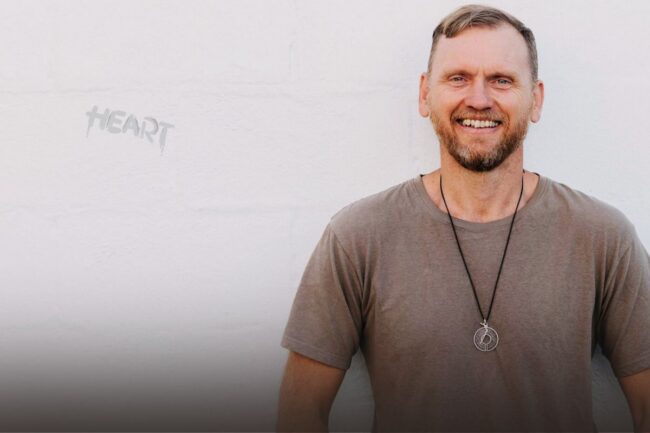
Subscribe to Guy's Podcast:
#456 In this podcast episode, Guy talked with Seán O’Laoire about Christ consciousness, which Seán described as the permanent awareness of the inner divinity of all beings. Seán explained that life had unfolded like nested dreams, where the ego, soul, spirit, and source were gradually remembered through deeper levels of awakening. He also shared his view that souls had chosen incarnation as a kind of divine hide-and-seek, where limitation, amnesia, and separation created the conditions for growth, compassion, and the return to God.
The conversation also explored Seán’s years in Kenya, where stories, proverbs, and African wisdom helped him see that every culture carried a sacred way of recognizing the divine. By the end, Seán reflected on reincarnation, soul groups, judgment, compassion, and the wisdom of children, encouraging listeners to let go of prejudice, become more curious and forgiving, and recognize that there was only God and only love.
Guy in the USA:
immortaltaoistrites.
Work with with Guy:
www.guylawrence.com.
If you enjoyed this podcast, you may also like: The Trap of Seeking: Enlightenment, Surrender and the True Nature of Self | San Qing
Libsyn Audio Version►
Timestamps
00:00 The Path to Unity: Understanding Christ Consciousness!
02:49 Life Is a Dream Inside a Dream Inside a Dream
03:38 Why Would Divine Beings Choose to Forget Who They Are?
08:21 Why Compassion Can’t Exist Without Pain
10:22 What 14 Years in Kenya Taught an Irish Priest About God
18:35 Has the Western World Overtrained the Left Brain?
20:25 Is Humanity Going Through the Birth Canal Right Now?
23:21 Are We Being Birthed Into Christ Consciousness?
26:02 Stop Looking for Jesus, Buddha and the Divine Outside Yourself
30:00 LIVE IN FLOW — Experience This Work in Person
30:40 Judgment vs Evaluation: The Difference That Changes Compassion
33:48 “Turn the Other Cheek” Does NOT Mean Accepting Abuse
35:41 The Famine, Stolen Aid and the Stand That Got Seán Expelled From Kenya
41:29 Why Seán Believes Jesus, Mary and the Buddha Return as a Cohort
43:59 Soul Contracts: Why the Same Players Keep Returning in New Roles
48:29 The Birth Experience That Became Seán’s First Reincarnation Memory
49:12 Do Past-Life Pain and Trauma Follow Us Into This Life?
52:40 Are You Wearing a Tulpa or a Halo?
58:10 Why Jesus Said You Must Become Like a Little Child
Referenced in This Episode
– Iain McGilchrist
– Thich Nhat Hanh
– Carl Jung
– Daniel Toroitich arap Moi
– LIVE IN FLOW
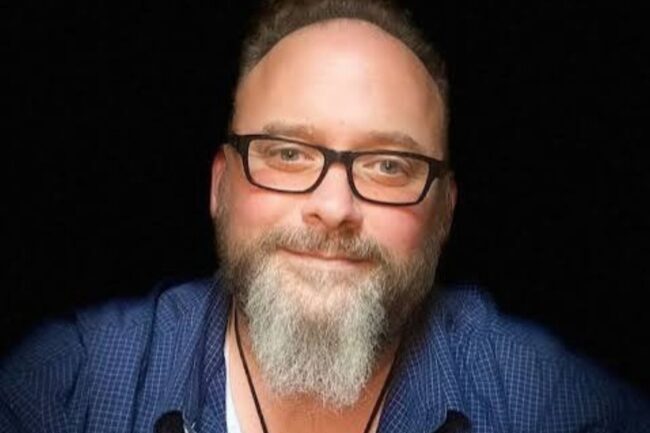
About Seán O’Laoire: Fr. Seán Ó’Laoire grew up in Cork, Ireland, in a family rooted in both the Catholic tradition and the older Celtic one. His druid grandfather and his mystic great-grandmother – who, in Seán’s telling, would have been equally at home in Sufi practice – gave him his first education in the relationship between the visible and the invisible.
He studied pure mathematics and mathematical physics before entering seminary. After ordination, he spent fourteen years as a missionary among the Kalenjin people of East Africa, an experience that permanently expanded his sense of how many valid cosmologies the universe contains. He came to California in 1987 and worked in Palo Alto in the diocese of San Jose. Then in 1997 he became a cofounder of Companions on the Journey (COJ) and their spiritual director until he retired from that position at the end of December in 2025.
How to Contact Dr. Seán O’Laoire:
www.spiritsinspacesuits.com
Transcript
Sean:
Before I go to bed at night, I take a thought that I want some kind of input on, and I send it into the universe to my higher self. So I asked this question years ago, what is Christ consciousness? And what I got was that Christ consciousness is the permanent awareness of the inner divinity of all beings. We’re like a Shakespearean troupe. This year we play Macbeth. Next year we put on Hamlet. Next year, A Midsummer’s Night Dream. It’s the same group of actors, but we’re playing radically different roles. But the only difference is there’s no script and there’s no applause.
Guy:
Sean, welcome to the podcast, sir. It’s an honor to have you on
Sean:
Million. Thanks a million
Guy:
Yeah. I, I, do you know what? I haven’t asked this question in quite a while on my podcast, but I thought it might be a nice place to start for you, is that if we were, if we were at an intimate dinner party and you sat n- sat next to a complete stranger, right? And they just started chatting to you and said, “Oh, hello,” and, and said, “What are you passionate about?” Or, “What do you do for a living?” How would you respond?
Sean:
I would say that my passion is about, um, smuggling Christ consciousness, you know, into our, um, secular society.
Guy:
And do you know what I’d ask then? Well, how … When you say the word Christ and consciousness, the two words that when they come together, you know, that could be interpreted as anything and everything depending on our upbringing, our cultural beliefs, and so forth. What does that mean to you?
Sean:
So I’ve been recording my dreams, Guy, since 1978, uh, I see them as well. Before I go to bed at night, I take a thought that I want some kind of, um, input on, and I send it into the universe to my higher self, or to my guardian angel, or God, or whatever, and I constantly ask questions. So I asked this question years ago, “What is Christ consciousness?
Can you give me a definition of Christ consciousness?” And what I got was that Christ consciousness is the permanent awareness of the inner divinity of all beings, everything that exists is the word of God made flesh, and that Christ consciousness is the ability, the permanent ability to recognize that and respond to it in others. It’s a little bit like the, uh, the Hindu namaste. The divine in me recognizes and honors the divine in you, whether the you, you know, is Guy, or an oak tree, or a bunny rabbit, or my enemy, that there is only God.
Guy:
It’s only a guide. That to me is our place to answer to spirits Holy smoke. So, and it’s, uh, and it’s just a… So it’s a remembrance and the development of awareness
Sean:
There you go. There you go. Totally, yeah. Because, um, I remember once getting another download that told me that, life is simply a, a, a dream that the ego is having, and the ego is a dream that the soul is having, and the soul is a dream that spirit is having, and spirit is a dream that source is having. So basically, we’re in nested dreams. You know, it’s a question of sequentially waking up to the next level of the dream, the higher level, until finally we identify with our divinity, and ipso facto, we identify the, the divinity of everything we encounter, even in an incarnated three-dimensional form
Guy:
Y- you know what? I’m gonna have to play this podcast back twice already from what you’ve just shared in the first few minutes, ’cause I, like, it resonates on every level, but my mind is wanting to catch up on what you just said as well. So, so, so in ultimate, in that remembrance back to, to divinity, why aren’t we born in.. W- if we’re already divine and in that remembrance, like, if you look out in the world, it feels like so many of us are so caught up in the egocentric Western thri- you know, physicality of reality. It’s just, it’s just bypassing us the whole time
Sean:
So I think for my theory about it, uh, Guy, is this. I believe that before there was time, there was only the divine, or God, whatever you want to, to call it. But if God is all that exists, God is lonely because, uh, there’s nothing with whom to have a relationship. if you can’t have a relationship, you can’t generate experiences. And if you don’t generate experiences, you cannot evolve. And so God sang herself a lullaby, and you know this better because you come from Australia. The Aboriginal people of Australia believed that the ancestors sang creation into being. God sang herself a lullaby and created what Hin- what, um, Judaism would call Netzer Zod, sparks of the divine. So created these, you know, uh, bite-sized pieces Those pieces are sold.
Now, holographic they’re hundreds and a hologram is an entity that contains the totality of itself in every one of its component parts, and a fractal is a pattern that repeats at an infinite number of scales. And so now you’ve got God and you’ve got all these fractally versions of God. and I had this And I had this vision where called God called us all together, all the billions of souls and said, “Let’s do something creative as a group. Why don’t we create a And the decision The decision was, create a create a cosmos. And we created a cosmos, stars, planets, moons, et cetera. And we were amazed at what we created.
And We were in awe as, so we were like these like, these observers of what we created. And call, then Co- us God brought us back for a second conference and said, really “That’s really fun, but do could we do something better?” And the decision was, create avatars so let’s create avatars so we can into insert ourselves into the cosmos and experience it from the inside, not just be witnesses from the outside.
And witnesses were called this twotikta, the participant observer of kind of, uh, anthropology, that we are that we are both participants in the drama and observers of the drama. even as So even as we participate, we do not identify with the roles we are playing. We’re just members in the, uh, Shakespearean troupe playing a particular part.
And so, uh, then we volunteer levels for different levels of separation from source. We play seek with hide and go seek with God, and basically God playing hide and go seek with herself. And so there are various dimensions of forgetting, and and the toughest of all is a three-dimensional one, ’cause we volunteer for incarnation in these, space suits, there are four accept.
We accept the first one is we trade our size for this little for this little hundred and fifty pound, space suit that you know, spacesuit that I’m wearing right now. Secondly, I have to trade, you know, my cosmic intelligence for the three-pound piece of wetware between carry between my ears. And then thirdly, because this wetware is so limited, I cannot understand the entire gestalt, I have to so I have to break it up into bite-sized pieces and process rise to the sequentially, giving rise to the illusion of time.
And then fourthly, I have amnesia for who I really am, where I came from, and what my mission is. And the, the job then is, with all those limitations, you can you work yourself original back to your original being, really realization you are God and everything arises from God? So that’s, that’s the fun if we’re God and we know we’re God, you know, we can’t be blindsided of the game. If you’re trying to do it all the time, if you’re being giant steps everywhere, there’s no growth possible and there are no experiences possible. So this is a volunteering action God to find God within experiences so God can keep evolving.
And in that, that yearning for realization, that’s kind of like that drawing back to, to source divine, ’cause I can only speak from my own journey, that’s what, what, what’s been happening through life. Like, you know, there was– it was fundamentally underneath it all, not even knowing, and I always liken it trying to pull a splinter out of my soul. It was like, I, I just don’t know what’s going on here. You know, and then, and then as you deepen your awareness and relationship to yourself, like these– the, the path seems to open up.
But I guess the question is, is that yearning They’ve, like innate in us, and if we, if we answer it, that’s where the growth happens. Like that, that, that’s a feedback as we are separate or the illusion of separation from divine. So that, journey back home to self, to source, to that realization is where I guess the magic happens for the source God universe in itself Absolutely. Because I don’t think… For instance, I can’t develop compassion unless I have the experience of pain itself. And so it’s interesting when I look at, uh, compassion, which is a major for- part of Jesus’ teaching and the Buddha’s teaching, I see that there are five kinds of compassion. The first one actually is, um, what are called mirror neurons.
They’re actually neurons in the human brain that are activated. You know, if I see another person suffering, and you were to put an electroencephalogram on both of our heads, the same areas of my brain are lit up as the areas of the person who’s suffering. So they’re called mirror neurons. So we’re neurologically wired for compassion. we’re emotionally wired for compassion because my heart is tugged when I see somebody suffering or an animal suffering. It’s a second level. Um, so emotional. The third one is sociological. I want to reach out now and help somebody who’s, you know.
You know, from suffering from cancer and then he can hospital go to the hospital once a week for chemotherapy and I drive him to the hospital or I provide him with meals. So that’s sociological. one The fourth one is religious, the belief system that intentionality can actually help heal. And you’re an expert in that.
You’ve been doing that. Mm-hmm. That your intentions can actually, uh, heal other people. So it’s a kind of religious level. And then the fifth one is the mystic of the realization that this is God’s game, ultimately this is the guide- this is a game that God is playing. So when I’ve done everything I can, I have to realize, you know, God understands this game much better than I do. So having done whatever I can do, you know, I can go to God and say, “Over to you.”
Guy:
Wow. Holy moly. Yeah. I’m, I’m intrigued as well, um, th- ’cause for, for whatever reason, I just feel compelled to ask you this and you– ’cause I’d noticed when I was, um, this morning that you spent 14 years in Kenya, right?
Sean:
Right.
Guy:
And I’ve never been, and in some ways it feels like going to Mars for me, you know, living in my little, little town in Port, Port Macquarie, Australia at the moment, you know. But I’m, I’m really intrigued to know what you learned from that time and how they even look at life, look at death, look at source, and that relationship and, and your experiences from that that have helped you along your journey.
Sean:
Sure. So I was lucky enough to have been raised bilingually. I was raised in Gaelic and, uh, English in school. So all of my education was through Gaelic until I went to high school. so I come from a kind of a, a storytelling culture. And, uh, and, and my grandfather was kind of a druid, so I, I picked up kind of a druidry and Celtic mythology from him. And my great-grandmother, who was still alive until I was 10 years of age, she was like a Christian mystic.
For her, Mother Mary was more real, you know, than you are to me right now, Guy. She would talk to Mary aloud every day, and I was privileged to these conversations. So I got this interface of these two. But I remember spending a summer holidays before my senior year in high school a village in the West Cork where Gaelic is still the mother tongue, and I was collecting proverbs. And in Gaelic, the word we have for proverbs is séimhiú, means literally means ancient words.
And I collected four hundred and thirty-two proverbs. And I would go from house to house and ask the elders, “Give me a proverb and tell me in what context you might use it.”And I remember one old man saying to me, he said, “You know, if Christianity to had never come to Ireland, we could live according to the proverbs.” And he was absolutely right because are the proverbs of the wisdom are the distillation of the wisdom of a culture.
So I got to Africa as a twenty-six-year-old man. have the privilege of had the privilege of learning four languages cultures and immersing myself in and I would say their mythologies. And I would say to them again and again, Christianity had never come to Africa, you guys according to your proverbs.” So for me, proverbs and stories and parables are the archetype wisdom of a culture, and that’s why I love the version of the Apocrypha so much. Mm. And so what I learned through-Africa is that, you know, it is not only the New Testament or the Hebrew scriptures or the Bhagavad Gita or the Pitakas of Buddhism of or the Quran of Islam the word of God.
Everything that exists is the flesh. God manifest. Every story a parable is a parable about the divine. And so when you– I used to see that important not where you’re looking, but how you’re looking. So there’s a great story about the Buddha. He’s walking on the street one day, he picks up a flower, and he holds it aloft. And the disciples dude, are watching, “Careful. Why do you have a flower?” And he turns to them waiting, waiting, and finally, one of them gets it and breaks into a big smile.
The Buddha says– Buddha said, “You got it then.” what he got was that, if you really see a flower, you see everything. Thich Nhat So Thich Nhat Hanh would say very beautifully, “A flower consists totally of non-flower elements. If you took away the soil and the water and the sunshine and the rain, and of non-flower elements. wind, so wouldn’t be a flower.” So a flower consists totally of non-flower elements. Now, so it’s not important where you look, it’s how you That’s what look. That’s what Africa taught me, that it’s how you look at something because we see things as we are.
We don’t see things as they are. So what kind of a mindset or what what kind of a mindset or what kind of soul set do I need to get into. I can see to the core of reality, ultimate reality, and not just be con-be, be kind of confused by the kind external kind of, uh, realizations of it?
Guy:
Wow. Why did you go to Kenya?
Sean:
I wanted to be a missionary priest since I was about 10 years of age. I, I knew I wanted to be a priest, and I knew I didn’t want to be a priest in Ireland. know, I had this vision of kind of, uh, spreading the truth uh, you know, kind of Pagan people or pagan. Um, and so I trained congregation. Spent, uh, eight years in the assembly. Uh, theology, scripture philosophy, scriptures, texts Yeah, and then went to Africa at age 14. at then at age of twenty-six. then spent And that’s been 14 years now, still and I’d still be there if I hadn’t been thrown out by the government.
I was clashing with the government when I was in favor of social justice, so was given I was given 48 hours to leave Kenya on the 28th of May, 1986. Otherwise, I’d still be there. Uh, but, um, I was fascinated. Initially, I thought I was going to convert people to Christianity, and then I realized what I was trading stories. I was basically a storyteller, and I was basically a storyteller. And I was a, a storyteller coming from an Ire- an Irish Catholic background, were storytellers and there were storytellers coming from a Kipskegis or a Carrington background, and we were trading stories.
And so we were learning from each other’s stories. And that for me is what, is called, uh, Jung called it a Gnostic intermediary, uh, Jung called it a gnostic intermediary, than a kind of a, a crusader. A crusader is somebody who tries to impose their view on some other culture. A gnostic intermediary is somebody well-versed in two different systems them to their mutual benefit, and cross-fertilizes them to their mutual benefit. So some third higher order emerges from the cross-fertilization. So that’s how I see my role, as kind of a gnostic as a kind of a Gnostic intermediary.
Guy:
Huh. It, it, it’s, it’s fascinating, isn’t it? Because in, uh, in my p- personal journey, I really never grew up with any religion. I never went to church. I, I, I mean, I grew up in the valleys of Wales. That’s where I’m from, like South Wales.
Sean:
Brilliant
Guy:
Yeah. Um, but I’ve been out in Australia, you know, um, over 20 years now. But,
Sean:
Okay. Okay
Guy:
but so I k- I kind of felt like in some ways I was a blank slate because I didn’t have any people putting their ideas into how it should… how it is, per se. So it’s, for me, it’s been a, a journey of just kind of discovery through… And then, and then that’s why I started this podcast eight years ago, nine years ago, ’cause I was having quite profound mystical experiences on this journey, and I, I wanted to start making sense of it and having conversations with people so I could just go hear somebody else’s point of view and what they had to say around a, a lot of these things, you know?
Sean:
Yeah, Wales of course, is a Celtic country. I mean, there are more native speakers of, uh, of Welsh in the world than there are Irish speaking Gaelic in the world or Scots Gaelic in the world. So you come from a culture which is imbued, you know, with the, with, with a story, you know. And a kind of a– even if you weren’t indoctrinated in any kind of Christian sense, I’m sure that the very atmosphere itself impregnates you with a kind of a, a Celtic, uh, meta, uh, story, even if you weren’t kind of indoctrinated in a specific strand of it.
Guy:
Yeah, no, that, that, yeah, that would be true. Yeah, yeah, yeah. And I, I f- ’cause I find the whole thing fascinating just from an observation that, um, you know, like many of the traditions, uh, of different cultures around the world, like, uh, have been lost in some way due to the, the Westernization of things. And it feels like that in some ways we- we’ve just become so disconnected from any kind of sacredness that w- was held so dearly for, for, I don’t know, hundreds and hundreds of years for, through different cultures and people.
But now we’ve, we’ve lost our way in, in many ways and, and, um, we’re more connected than ever through the internet and through, um, you know, technology. But, uh, you know, I, I believe l- like loneliness is one of the greatest pandemics and killers there are right now.
Sean:
Absolutely.
Guy:
and, and yeah, and to me it just feels like how, how do we get from the head, the, the mind-based paradigm of understanding these different concepts to actually living it and being in a much more heart-based space that we are then l- living examples of it, not just knowing examples?
Sean:
Have you ever come across the work of Iain McGilchrist? Scottish, brilliant Scottish psychiatrist who’s
Guy:
I’ve few…
Sean:
two-volume tome on this, the, the difference between the left brain and the right brain
Guy:
I’ve heard of him. I’ve heard of him, yes
Sean:
He’s saying exactly what you’re saying, uh, right there now, Guy. That in some senses, the left brain has been overemphasized in Western societies particularly, and it’s a survival mechanism that allows the bird, you know, to pick out, you know, seeds on the ground or a, a lion to, to spot the prey. So it’s constantly watching just in the here and immediate now. The right brain has a kind of meta perspective. You know, are there predators coming to catch me?
And so as well as trying to … me trying to catch my dinner, is there something trying to make dinner of me? And but so the, the, uh, the, the, uh, corpus callosum that connects the two is very important. But the w- the, uh, Western society has focused completely on the left brain, on the here and now, the rational, and we’ve left out the kind of the extraordinary, the kind of the spiritual aspect encoded in the right brain. So it’s reconnecting these two again and having literally kind of having the realization that we have a, a meta, a metacognition that we can access to create other, other states of consciousness.
And so obviously there are many, many ways of doing that. Meditation does it for me. Eucharist does it for me. For some people, it’s plant medicine. For other people, it’s, you know, uh, the, uh, walkabouts, you know, in the bush in Australia. For other people, it’s, you know, the sweat lodge. So there are very many ways of, you know, altering our states of consciousness so we can access these higher realms.
And at that stage, we’ve access to a much deeper and a much higher reality than what’s fed to us, you know, by the mass media and newspapers and the rational thinking where we have like, uh, the focus for 10 seconds on this piece, and then we’re going on to the next piece.
Guy:
Yeah. Yeah. And, and it does feel like– I mean, what do you– when you look out in the world right now and where the world is at, what, what do you see, you know, in terms of people, where we’re going and, and
Sean:
I think, I think very positively. I think, uh, um, I’m fascinated by the work of, um, this notion of the perinatal matrices. Have you ever come across this notion? It’s a, it’s, it’s a Czechoslovakian, a psychiatrist, you know, and he has this notion what he called the perinatal matrices, that there are four stages of pregnancy and birth that subsequently correlate with the adult neurotic behavior in, in a person. And so the first, uh, ma- uh, matrix is, is the womb a happy place when the child is in utero? Is the mother abusing alcohol? Is she being abused by her partner? You know, is she, uh, malnourished, or what’s the experience like for the baby in utero? So that’s the first matrix. The second one is the contractions have begun, but the cervix is still closed, so there’s no exit possible.
So the walls are coming in, and the roof is coming down, and the child is freaking out, but he can’t escape. Then the second matrix. The s- the third one is the cervix now opens the child is spelunking through the birth canal, but that could take up to forty-eight hours- guarantee, you know? And then there’s no guarantee, you know. And then the, the fourth one, the child is out, the difficult part is past. Somebody is screaming and the touch, there’s bright lights and loud noises.
He’s gonna have to learn to kind of breathe on his own for the on his own for the first time. So it’s a totally different. Now, he believes that, you know, that corresponds to particular kinds of adult neurotic behavior subsequently. But I like to take his work and I apply it globally, and I ask myself the same questions. If the earth is a womb, is it a healthy womb or an unhealthy womb at this stage? What’s happening with the planet Earth? And secondly, have the contractions begun? And I think, yes, they have begun, and there’s no apparent exit.
The walls are at the moment. The walls are in various closing in in some very ways. If the cervix will open will and the birthing will begin, But it’ll be a really tough exit? And when we find ourselves at the other side, it won’t be just all kind of immediately. It’ll be a totally different environment. Like the child has to learn how to breathe, you know. It, It, l- If you put him on his back, he can’t turn over, so he have to learn turn over so he has to learn to stand up, to walk, to run, et cetera.
So even the new dispensation is gonna be difficult initially, part of but it’s part of the transition. I think we’ve got midwives and doulas on both sides of the veil who are ushering this new era. There are people like yourself at this side who are trying to usher it in here, and there are angelic beings at the other side who are guiding the process. So I have no doubt whatsoever that we’re not only gonna survive this, we’re gonna find ourself in a very different place. But it’s gonna take getting used to, and we’re gonna have to have the courage to have to kind of, uh, deal with the birth pains stage at every stage of this process.
But for me, the end point is that it’s kind of, it’s a whole new way of being human. We’ve ascended. We’ve cast off this kind of old way of being human as a c- as a global community, and we adapt to a whole new status. We become, in some senses, uh, partially Christ conscious.
Guy:
Oh my gosh. That, I just love that, how you explained that. Yeah, ’cause that would… My next question for you then, is that being birthed into, I guess, more of the remembrance of this Christ consciousness?
Sean:
Yes exactly Yes Because it’s our birthright We volunteer to separate ourselves in order to play hide and go seek with God to generate new experiences the experiences of being separated And there’s a great statement you know e if you were not even raised a Christian there’s a great uh statement in the Apostle’s Creed where they claim that when Jesus died on the cross he descended into hell.
And I thought about what does it mean that Jesus descended into hell Because I believe what it was was this that you know um as a priest watching many many people die having the privilege of escorting them through the veil tend to die the way they live people tend to transition the way that they die And people who experience initially the other side in the way in which they’ve transitioned and then they have to start growing in the other side.
And so people uh are only comfortable with the frequency with which they’ve lived their lives and so that’s what they experience in the other side initially until they’re kind of persuaded to let go of a mindset of separateness and adopt a mindset of unity consciousness and that takes time So there are beings you know trapped Hell is not actually an eternal location It’s a frequency that we consign ourselves to selfishness and we can’t operate with a different frequency until we see some kind of light. And so Ch- Christ having experienced three-dimensional kind of limitation by becoming a human being, down two more depths, down into hell itself, into a dimension where people are totally locked into their own self-generated darkness, in order to beam light and love and compassion for them.
And so I, I totally believe, you know, that’s the process we’re in. We’re being elevated, uh, level by level, dimension by dimension, from one, 1D locked into their own darkness in order to beam light and love and compassion for them so I I totally believe you know that’s the 2D to 3D elevated and by now dimension by dimension from a one 1D to 2D to 3D here now to 4D, right up until we acknowledge our inner divinity and we recognize the inner divinity else.
And that that’s what the journey is about. Mm-hmm. the people And that the people who are waking up, that we have to take, vow. Buddhism says, you know, even if you of your own work out what you and you don’t need to want personally and karma, and you don’t need to reincarnate again, if you are being love, you have to keep coming back until sentient being awakens.
And so they’re the, they’re the Christ conscious beings that keep coming back among us, though even that they don’t need to work off any personal karma of their own. They’re coming back because the rest of us are still stuck in our illusions, right? They will keep coming back until every sentient being wakes up to the reality that there is only God and there is only love. to the reality that there is only God and there is only love
Guy:
You know, it’s very… I, I, I guess we– in some ways we, we, we condition and raise to look everything outside ourselves, even when it comes to Jesus, Mary Magdalene, Mother Mary, Buddha, you know, s- what-what-whatever, um, ascended masters, uh, worked, walked the earth and… But, but ultimately, that’s all withi- within us if we allow ourselves to,
Sean:
Absolutely
Guy:
to feel into that.
Sean:
Absolutely. There is no yeah- of God which is lesser than any other fractal of God. It’s only a selfawareness the selfrealization. Self with a capital S not self with a little S like an ego we have to s sequentially disidentify with lesser and lesser versions of who we think we are I mean we’re born thinking I am my in my in my physical body you know. But I’m not even certain about that. So as a little baby I’m gonna put my toe in my mouth to figure out who be who does this belong to. So I have to learn not to identify with my physical body.
And then about the age of eight months I have to de develop. I have to learn to identify with my ego. Because initially there’s only what’s called the motherchild complex. The little infant believes there’s only one entity here and I control it I scream and a breast appears you know I holler and somebody cuddles me. And now about the age of eight months the child comes to the awful realization. Holy God there is not just one of us. There are two of us and she has all the power. She can walk away I can’t walk away but she can walk away.
So now the deve the ego develops the sense of separate self. And now I have to develop all these defense mechanisms I have to try to even the playing field. What can I do to make sure I control the situation. So I can be a really loving child, smiling so she won’t look at me, or I can scream my head off so I force her to come back in. And we continue developing these defense mechanisms from childhood, you know? Am I gonna be the class clown? That’s all I have for approval. Am I gonna be kind of the jock?
I gonna be kind of the, uh, the A-level student? What do I need to do in order to be, be loved and accepted? identifying all these versions of ourselves, identify with the relationships we’re in, we identify with the thoughts we have, and then we identify with the professions we’re in until finally we let go and realize, “You know what?
This is God having an experience, you know, through this particular vessel.” And then after that I can let go and let God do whatever she needs to do through this vessel. Hmm. And then I become, become a paintbrush, and God needs to do is holding the brush, the canvas. The world is the canvas, and God is drawing it through this brush.
Guy:
Oh, beautiful. And then it, it’s like– It’s almost like allowing yourself to, to have the courage to live with that and let it express itself through it without the, the old self holding, holding you back. You know, that, uh, that’s, that’s the wiggle room where I’m in at the moment as well, and, and just really al-allowing that brush to express itself fully. It’s almost like we need to get out of the way, the physical bit.
Sean:
Absolutely. And we then, we have to be really careful ’cause the ego is so– the ego has an, an extraordinary penchant for recognizing a kinda, a winning strategy and trying to get ahead of it and claim it. And so even as the soul is doing great work in the world, the ego wants to take control and say, “It’s me doing that.” And when the ego gets in, and then it’s what happens to kind of the churches, that the ego of the institution takes over from the mission of the institution, and then it’s all about, you know, protecting the self or, uh, getting money or control over individuals, and, and we’ve lost. Yeah
Guy:
Absolutely. Well, uh, just on, on this topic that, that came in for some reason the word judgment just started coming in, in that, and I f- I feel judgment is, is like the … I, I’ve used the, I found myself using the words the handbrake to the divine. It’s like, it’s like you slam on the brakes w- when you’re in there. Why, why are we so fearful of not shining, shining bright and, and, and being judged and, and what others say and even what we, more importantly what we’ve been saying to ourselves as well?
I’m standing here right now in Lake Taupo in a beautiful retreat space, and there’s a vast difference between an intellectual experience and passive listening to a fully embodied lived experience, ’cause that’s what retreats can do. They can help you land, start to truly reconnect to yourself, to others, to nature, and to spirit as well. There’s so much in it. That’s why we created Live in Flow, and that’s why we are so passionate about getting this work out there and bringing people together. If you wanna find out more when our next retreat or event is coming up, just check out the link below. And now, back to the podcast
Sean:
So for me, I like to distinguish as well between judgment and evaluation. So for me, judgment is ascribing ontological value to a person or to an event, you know. That’s a bad person, or this is an unlucky circumstance. So judgment is ascribing ontological value to something. Evaluation is determining the appropriate response to a situation or to a person.
So they’re very, very different, ’cause judgment is very egoic-based, you know, it’s about some form of self-protection. Whereas evaluation is about determining what does the soul want to do in this particular circumstance? What relat- what kind of relationship do I need to have with this particular kind of person right now? So again, I believe there is another way of looking at compassion, I call it the four Cs. That the first way is confirmation.
Attaboy guy, you’re doing a brilliant job. The second one is cooperation. You know, you’re on one side of the microphone, and I’m on the other side of the microphone, and we’re working off each other. The third one is compensation. You know, I make a mistake, and you correct me, you know, and I’m happy that you corrected me, I got my facts wrong. And the third one is confrontation. You know, I’m, I’m messing around, and I’m messing about and they’re not taking you seriously, and you have to say, “Good. you know, focus here. I need your attention.”
So, for me, it’s like a ball game, so that, um, every person on the team has, has a role, and, um, we’re encouraging each other and, and we’ve got different roles, complementary roles, and if one guy kind of, uh, makes a mistake, the team member is gonna kind of compensate for the mistake. But at some stage, if some guy is– If the game is all about him, he’s gonna get benched by the coach and traded to somebody else. Yeah. So that compassion comes in those four flavors. So that’s, it’s important to know which flavor of compassion is appropriate at certain things. Where is it important to confirm?
Where is it important to kind of, role, uh, we’re encouraging each other. You know, and we’ve got different roles, complementary roles. And if one guy kind of, uh, makes a mistake, a team member is gonna kinda compensate for the mistake. But at some stage, if some guy is– if the game is all about a master at determining when get benched by the coach, he may even get traded to some team. Yeah? it’s, compassion then comes in those four flavors.
So it’s, it’s when. He would call out the Pharisees. “Woe to you, scribes and Pharisees, flavor of compassion is appropriate in which circumstance. Where is it important to confirm? Where is it important to kind of, uh, uh, compensate? Where is it important to kind of cooperate? And when is it ap-appropriate to confront? And Jesus was a master at determining when was when. He would call out the Pharisees, “Woe to you, scribes and Pharisees, you you hypocrites.
You bind heavy loads on people’s shoulders, and you won’t lift a single finger to lift them. You travel over land and sea to make a single proselyte, and then you make them worse than yourself. You’ve stopped them from getting into the kingdom of heaven,” which and sea to make a single proselyte, and then you make them worse than yourself, is the realization of their God self. And so, he wasn’t afraid to confront people. So that’s the kind of the dance for me between, uh, compassion. Yeah. That’s my ten dollars.
Guy:
I love it. I love it. That really, really helps land, ’cause I, I wrote something down earlier as well, and it’s like, um, the c- when spirituality collides with injustice.
Sean:
Yes, yes, yes
Guy:
and it’s, it’s, it’s how do we apply that, you know? Because, uh, you know, uh, is it about just being peaceful, passive, and just, you know, letting yourself get washed over or actually standing in your ground but, but coming from a heart-based place and, um, and appropriately what’s the best decision here? I, I find that just a, like a fascinating, um, space in itself ’cause, uh, what are your thoughts on that? Because, because I, I think it can be, it can be misunderstood in many ways.
Sean:
Yeah, you’re absolutely right, and it’s a mistake that a lot of people make when they think about Christ, that it was all about turning the other cheek. you think about it, when turning the other cheek, what is it? If, uh, if you slap me with your… If you’re right-handed, most people are right-handed, and you slap me with your right hand, you’re gonna hit me on my left cheek. I turn my head, you can’t slap me anymore. You’re gonna have to use the back of your hand.
So I’m disempowering you by, by turning the other cheek. So he’s not saying just sign up for more abuse. He’s saying, make it more and more difficult for people to abuse you. That’s what he’s actually saying. when you look at Jesus Christ, he has no compunction at all about, you know, standing up to people and calling them out on, on their crap when it’s appropriate. But I would say 80% of what he’s doing is confirmation, cooperation, you know, and calm, and, and kind of, uh, uh, and abetting the good.
And 20% of the time, he’s calling out what needs to be called out, and he’s not compunction about doing it in the strongest possible terms. So to paint Jesus as this pacifist who just lies down and let the people walk over him, that is not his message. his, uh, his entire public ministry is about learning when it is appropriate to confront stuff. He has no problem about confronting dev- the demons in, you know, when somebody is, uh, possessed, demon-possessed. ‘Cause at the time of Jesus, the belief system was that all illnesses are of a demonic origin.
Whether it’s a physical disorder or a mental disorder or a spiritual disorder, it’s all demonic. And so the way you address it by casting out a demon. So he has no problem about kinda dealing with that level of darkness by opposing it. And so this notion that, you know, turn the other cheek means, you know, just lie down and people walk over you, that’s not what he was saying. And it’s very important, you know, sociologically, you know, to be able to call out, you know, uh, regimes in, in our time and in our history, you know, which are, uh, kinda degrading human, you know, kind of, uh, rights.
To have the courage to be able to stand up. That’s what got k- got, got me kicked out of Kenya. That I was standing up to the government about abuse that was happening in my own area. There was a very bad famine in Kenya in 1984, ’85, I was bringing food in, and I was distributing food to 19 villages. And a local politician was using government troops, and he was taking the food from his own people, and he was selling it. And he and I clashed furiously at public meetings.
And finally, I had a meeting with the president of the country, Daniel Toroitich Moi. I spoke his language, uh, which was, uh, Tugen, you know, and I was given 48 hours to leave the country. And so opposing the, the, the price I paid for it was getting kicked out of Kenya. but I, there was nothing else I could do. I could, I couldn’t watch this happen and keep my mouth shut.
Guy:
What, what did you learn from that experience? That’s amazing hearing you share that because, like, one thing I realized at the beginning is you said you’d be still living there now if you hadn’t been kicked out. So clearly it was a big… I- it’s Kenya meant so much to you, but yet here you are standing up for what you believed in, knowing there might be consequences, and those consequences cost you to, to leave and start again, you know?
Sean:
It’s a great que- great question, guys. So there’s, there’s three responses to it. The first one I think is, if I hadn’t, if I hadn’t been Irish, maybe I wouldn’t have been as he- headstrong, and maybe I would have undone my rhetoric a little bit, and maybe I could have managed the situation more politically. Yeah, that’s a possibility. I don’t think it would work long time, but it’s a possibility. The other possibility is that, uh, I needed to be kicked out of Kenya in order to come to the States, ’cause I really feel that, you know, my mission has been to s- you… At the very beginning you asked me, my mission is to smuggle Chri- Christ consciousness into Silicon Valley.
I literally wound up in the core of Silicon Valley, No way. I’ve been smuggling Christ consciousness through. So that wouldn’t have happened if I hadn’t got kicked out of Kenya. Third thing is, I begin to realize, you know, that I’m a big believer in reincarnation, ’cause I’ve had many, many reincarnational experiences, that I’ve had many experiences of being associated with some kind of religious institution, whether the Catholic Church or Druidry, you know, where I was part of the all-boys club, you know, holding the secrets away from the, the laypeople, and realizing at some stage, you know, that’s not what I’m, that’s not what I’m a priest for.
I’m here to kind of to share the goodies, not to hoard the goodies. And realizing that, you know, I’ve learned this lesson in many, I spent many, many that I don’t want to be part of any institution or organization that’s hoarding the goodies, whether it’s kind of, you know, the, the, the Gospel message, you know, or kind of salvation or whatever it incarnations. I, to fully appreciate the gifts that God has I don’t of want to be part of any institution or organization that’s hoarding the goodies.
Whether it’s kind of, you know, the, the gospel message, you know, or kind of salvation or whatever it is. You know, that everything is a guide and everybody’s entitled to fully appreciate the gifts they’ve got, to all of us. And that is– it doesn’t just belong to the priest or to the hierarchy or to the top politicians or Britain or a few people. It’s the birthright of every human being on the planet.
Guy:
Yeah. Amen to that. And it, it’s, it’s, it’s like– But I guess one of the, the, the challenges in then is the spark that gets people hungry to really be drawn into the excitement of that self-realization.
Sean:
Absolutely,
Guy:
that’s– that, that’s changed my life. You kn- you know,
Sean:
I think this is where, this is where, okay, this time gets in our way. It trips us off. Because we’re thinking, you know, “I gotta figure all of this out, and I’m, I’m… I’ll be 80 years old next month. We have to- I’ve gotta
Guy:
Oh
Sean:
it all out the first 80 years of my life,” you know? I’ve had many, many lifetimes to try to figure this out, and I’ll live many more lifetimes to figure it out. So to try to solve all my problems in this little period of time and figure if I don’t get it right at the end of this, you know, I’m screwed. I don’t believe in that. I believe it’s gonna take as long as it’s gonna take, and I believe the same thing is true for the human species, cross species. It’s gonna take as long as it takes for the human species to get it.
I had this great vision one time, uh, of Gaia, uh, all of these souls, you know, coming in God’s presence, and they were all volunteering for particular kinds of missions. And this great soul, this Mahatma, stood in front of God and said, “Send me to that planet, the third planet, the third rock from the sun in that particular galaxy, and, uh, I will breed life on it until I throw up a life form capable of recognizing its own divinity, and ipso facto, the divinity of all other beings with whom it shares the planet.” And God said, “Okay, go for Okay, well, all right.
And Gaia came to this It was little rock, which was pure rock, just and it was just basically stone, you know, four point six billion years ago, and started creating an atmosphere, which is a womb, in order to generate life, and then created a biosphere and then a noosphere, you know, 4.6 billion years ago, and started creating an atmosphere, which is a womb, in order to generate life, and then created a biosphere, and then and she’s generating life.
And eventually, a human species arrived, and this is the nearest thing to beings who recognize their own divinity of other, others. But and that it’s within all others. But we blew it. We’ve been here several times before, maybe half a dozen, and destroyed technology, our, our hubris. And now we get another chance. I our technology and our progress, and now we get another chance.
And I think actually, according to the Hopi legend, this is the fourth we’ve come to this place, and we’ve blown it all of the other three times through our technology and our mindset. And we’re standing on the time we’ve come to this place, and we’ve blown it all of the other three times through our technology and our wrong mindset. And we’re standing on the brink again, and we could destroy it again, sociologically, you know, or through technology.
And here’s our chance. that says, “Will we, will we, will we be the time we get it right?” And if we do, it’s great, but as I was saying, and if we don’t, we’ll be back here doing it again.
Guy:
Do, do you believe this is the generation that’s– the, the, the– where these choice points is happening at the moment?
Sean:
the closest, I think this is the closest we’ve ever come. So I believe, for instance, that I think that there was a cohort of souls that came onto this planet many, many times. Uh, one of the, one of them is the Jesus figure that we know, uh,
Guy:
Mm-hmm
Sean:
of Nazareth. But I believe that Jesus and his mother, Mary, and Mary of Magdala, and John the beloved disciple, and John the Baptist, you know, were a cohort who came, uh, in many, many dimensions, tried to raise the consciousness of different dimensions, and that they were on planet Earth several times before they came as Jesus of Nazareth.
I think that the Buddha was a previous incarnation of Jesus. I think his cohort was a previous incarnation of very advanced beings. And so they came again and again and again to kind of move lo- this truck, you know. And I think that, you know, they’re back, and they’re not back as individuals now, they’re back as a movement. The Dalai Lama said at one stage that the next Dalai Lama will not be a person, it’ll be a movement, and I think it’s a movement at this stage.
So we’re looking to a whole, a whole, uh, group of people, all of whom are awakening at the same time. There’s no perceived leader. There’s no guru in charge of the rest of us, you know, telling us what to do. It’s each of us recognizing the inner guru and the guru in the other, you know, and cooperating with each other so that we, we’re like a team all pulling in the same direction. I remember another time having a vision where I saw this.
Actually, I remember another time having a vision where I saw this huge big rock in the middle of a field, and there were like, um, seven ropes attached to it, and there were people pulling on it. They were, they were all pulling on each of the ropes, but they were all pulling in different directions. And so there’s a, a mathematical formula that tells you know the, the force that everybody’s ex- and pulling and you know the they’re going, you can actually predict where the rock is going to move to by the summing the, summing the parts. And we’re pulling it over a cliff where we’re going now.
So we need to be pulling in the same direction towards heaven, towards Christ consciousness. So getting behind a single rope rather than being at variance with each other and make sure not pulling it towards the cliff, that pulling it towards heaven. Direction they’re going, you can actually predict where the rock is going to move to and the sum of the, sum of the parts. And we’re pulling it over a cliff where we’re going now. So we need to be pulling in the same direction towards heaven, towards Christ consciousness. So getting behind a single rope rather than being at variance with each other- Mm-hmm and make sure we’re pulling towards the cliff rather than pulling towards heaven.
Guy:
Absolutely. Do you– So y- you’ve spoke many times like, um, about the soul reincarnation and, and even then you expressed about them coming down together in this time, like as a communal report. What, what, uh… How did you come to those conclusions for yourself, especially with like things like reincarnation and even that if we are, you know– There’s two questions, ’cause one is the reincarnation aspect and then the soul aspect. Do, do other souls, do I come along with other souls to learn from each other to, for, to help our growth? Like I’d love to hear your thoughts on these.
Sean:
So let me respond to the second question first, then go back to the reincarnation.
Guy:
Okay
Sean:
have a big, I have a big belief that we, we come as we, we make what I call preconception contracts as a group of souls, that we travel from lifetime to lifetime with a cohort group of souls, with the same group of players. We’re like a Shakespearean troupe. You know, this year we play Macbeth. Next year we put on Hamlet. Next year, A Midsummer’s Night Dream. It’s the same group of actors, but we’re playing radically different roles.
So, but the only difference is there’s no script and there’s no plot. I had a, in my clinical practice, I had a, a client one time who was a professional, you know, actor from Hollywood, and he told me, his specialty was, uh, improv theater, and he told me there are two great rules to improv theater. The first one, if you’re on stage with another actor, you know, you have to, you have to work with any line your partner throws at you. If, uh, if you, if you throw me a line that I find too difficult, I say, “Guy, that’s … I can’t answer that. Give me a different line”, the whole thing is gonna collapse.
So I have to work with any question you give questionable. And secondly, I have to lines that I know are, are kind of feeding to your strengths, and then the whole thing is gonna take off. So we make this pre-conceptual contract but there’s no plan and there’s no script. We’re dropped into human incarnation in a particular culture, in a particular state of human history with a group of souls with whom we’ve incarnated contract, but there’s no plot and there’s no script.
We’re dropped into human incarnation in a particular culture at a particular stage of human history with a group of souls with whom we’ve incarnated many times in the many times in the past. Now, we know the past history of every person that we’re coming in with, and I know my own past history. I know how I performed in other times, in other incarnations, and I actually know the past histories of every single human being on the planet, all eight billion of us. So in with that knowledge embedded in me.
Now, I don’t have I, I’m, I’m coming in with in my soul. that knowledge embedded in me. Now, I don’t have conscious recall of it, but it’s embedded in me in my soul now land, now there’s no script. I’m with particular parents. They’re gonna treat me in some way. I’m gonna respond in a particular fashion. I’m gonna be sent to school and meet particular kinds of teachers. They’ll say things.
I’ll react to what they’re saying, and we build and we’re learning, you know, as a group in a plot, and we’re learning, you know, as a group what our needs are. As far as the reincarnation is concerned, I lived with peoples in Kenya who believed but it was a kind of a, a s- a different form of incarnation. So among the Kipsigis people with whom I lived- There were three different names that a baby was given when they were born. So the first name had to do with the circumstances.
So if I say to you, um, uh, “Kigurinin wa, what is your name?” of the birth. So if I said to you, um, And you say to Kiprop, my name is Kiprop,” me, my name is Kiprop. I know that you were born when it when it was raining. If you said to me, your I asked you what your name was, and you said to me, Kipsang, my name is Kipsang, I know that you were born on the doors. If, if you told me your name was Kipnando, I knew that you were born when the goats were coming home from the salt lake. So the first name told you the circumstances of your birth immediately.
The second name was kainetap muserk, the always called the porridge a special name. It was a special name that only the mother could use with the child. Nobody else was allowed to use it. And it was her way of when it got out pacifying a child when it got out of control, special name. And the third name was eight days after the baby was born, they’d bring in an elder of the tribe who knew the ancestry of the baby, and he started calling out names of the ancestors in chronological order. And when the baby ba- he sneezed, they’d would say, “Ah, say, “Okay, that’s the guy who came back. That’s the ancestor who’s appearing.”
So, and they– the, the ancestors kept coming back, and they’d say, “Oh.” And the Inuit people have a last name for the same belief same reason. When an Inuit elder is dying, a piece they take a piece of charcoal, and they make a mark someplace on the, on the, on the body, a special and then the elder dies.
And for the next kind of mark. And then the elder dies, and for the next two or three years, newborn were examined for this mark, and if the exactly the same mark was up in the same location, they’d mark say, “Oh, that’s same location. They say, “Oh, the ancestor.” the ancestor who’s come back.”
Guy:
No. Wow, that’s cool.
Sean:
that was my relationship with reincarnation. Then I come from the States, and I did a workshop. And in this workshop, the idea was that you get to experience your own birth process. So they create a pillows, and they play this very evocative canal of pillows, and they play this very evocative kinds of music. All the lights are out. And you’ve got somebody sitting with you, make sure you don’t get into trouble, and you get three hours own birthing process. Now, there were 23 of us in the class, 22 of them had to experience your own birthing process. Now, there were twenty-three of us in the class, and twenty-two of them had the experience of their own birth. When it came to me, had the experience of being a young Tibetan giving birth to her firstborn child. And it was so real that I had pains in my thighs for a week afterwards.
So that was pains in my for a week afterwards. So that was my first personal experience. I’d been kinda educated about it, and I had read about Hinduism’s belief, but this was my first. And subsequently then I’ve had maybe nine or 10 other, uh, kind of personal incidents subsequently then I’ve had maybe nine or ten other, uh, kind of personal recoveries. And then it made more of incidents from different lifetimes. And then it made more sense to me that the greatest way to let go of any prejudice to realize I’ve been in all the other positions in previous lifetimes.
Hmm. I can’t be prejudiced if I’ve been a female, or I’ve know that I’ve been female, or I’ve been gay, or I’ve been Black, or, or I’ve been, um, you know, a whore in previous lifetimes. So how can I now I’ve been there, be prejudiced against people in those positions? ‘Cause I’ve been there. And, uh, when I was there, I was prejudiced from the other side. So I can’t be prejudiced against any group or any person ever if I believe in reincarnation, ’cause I’ve been there or I will be there.
Guy:
Wow. Do you believe that we carry the pains and traumas from previous lives into the frequency of us in this lifetime? Uh, I don’t know how to word it, but
Sean:
Great question, guy. So again, I, I go back to Hinduism. Hinduism believes that there’s, there’s seven different levels of body. So there’s the physical, the etheric, the astral, the mental, the psychic, the soul, and, and, and God itself. So, uh, the, the belief system is that when the physical body dies, the etheric body hangs around for three or four days, like kind of the ghost body, you know, and then it leaves. And they believe that all of the experiences of the lifetime just ended are archived at the astral level of the body, and then you continue moving up.
And as you’re coming back down in your next incarnation, uh, as you move up into your soul self, all of the experiences of all the lifetimes you ever lived are archived at the soul level. as you’re coming back down to your next incarnation, you’re picking up kind of the learning from your soul, from all of your incarnations, and as you come nearer and nearer, nearer to physical incarnation, you’re picking up all of the wisdom from the, the last lifetime you lived. So it’s embedded in you.
You’re not consciously aware of it, but you’re programmed by it. So it’ll dictate very, very largely the responses you make to life situations in which you find yourself. And so I believe, you know, psychology says that there’s this battle between kind of nature and nurture, that, you know, nature is that you’re gonna be born a particular way, and you can’t ever change it. Nurture says, you know, you’re just a, a blackboard. We can write anything we want on it and create what we want. believe that nature is important, nurture is important, but the most important aspect of personality is the soul that’s coming in.
The chief determinant of the character of this, of the, the individual person right now is not your nature, not kind of your humanness, or not the family you came through, or not the education you got, but the soul of yourself. That’s the primary driver of your personality. The others are minor influences right there. And so, yes, we’re hugely impacted by the experiences and the learnings of all the lifetimes we’ve lived before, and that’s mainly what drives our ability. Why people can be born into the most dire of circumstances, the most abusive of relationships, and become, you know, saintly figures.
Guy:
No, it’s fascinating. These, these– Because, uh, w- from holding space for, for many people over a great deal of time and, uh, of my own experiences, I get to witness a lot. And, and and even just from my journey, like loneliness was a default kind of essence of feeling that I couldn’t shake off. So no matter who– especially through my 20s, no matter who I was with, how I was doing, there was always this, this feeling inside that I was separate from and I couldn’t let it in.
Hence why I, I ended up with the name of the podcast like that, I think, in some ways. But, interestingly, I felt that energy through going deeper into myself and exploring this work more and more. I felt these things leaving my body, if you like, as if it was energetically within me, and shift. And then there was like a default reset, and I was like, “Oh my gosh.” And the more I detached from the story, the meaning, the, the emotion and everything, and just become the witness to it, the m- the more it allowed it to move. And then that feeling was gone. Like it’s, it, it wasn’t a default anymore. Like, and I was like, “Wow, that’s profound.” You know?
Sean:
That’s beautiful. That’s beautiful. So as for me, I’m fascinated at kind of the difference between a tulpa and an egregore. A tulpa is kind of the cloud of consciousness I carry over my head, which is generated by my thoughts, my words, and my actions. So each of us is carrying a bubble of energy around with us that we have self-generated. And then the egregore the bubble which is created by an entire community. So there’s a second bubble. And so every experience we have is mediated my personal bubble, the tulpa, or the egregore of the group.
And so it’s a question of trying to identify how am I… I’ve got a statement on my mirror. The first thing in the morning, I look at it and ask myself the question, “What am I wearing now? Am I wearing a tulpa or a halo?” In other words, what am, what kinds of thoughts am I thinking? What words am I gonna speak today? What am I gonna do today? Is it gonna be predicated on fear or anger or ego, or is it gonna be predicated on my, my soul self? Am I gonna be kind of, um, kind of, um, led egregore of the community in which I live or the culture of which I’m a part, or am I gonna be fed by my soul or by I think, uh, it becomes really, really important to peopling the bubble. it light or is it
Guy:
by the soul of the system, the system health and the ego of the system. So I think, uh, it becomes really, really important to identify this bubble I carry with me. What’s, what’s peeking in the bubble? Is it light or is it fear? Wow. Yeah. No, that, that makes complete sense. What, what principles do then… How do you live your life then? Like, in terms of practices and be- being in space, like, like, do you live it through simplicity and just, um, ho- honoring meditation practices? Like, how does it look, a typical day for you? I- I’m intrigued.
Sean:
But typically, like so, I’m lucky enough, I live in the middle of the forest. My nearest neighbor is a, a half a mile away, and then the next near after that is two miles away. So I live literally in the middle of the forest. Um, and so I’m kind of a, a hermit in some way. Um, mass is very important to me. Eucharist is very important. You know, even though I was spiritual director of a community for many, many years, and I resigned at the end of, uh, December last year to focus on doing podcasts like this with, with people like you so I can get the message out more, more effectively.
And so, you know, normally I don’t see another human being during the day. You know? So, um, I go into town once a week to buy groceries. So I’ve been meditating for 62 years. I’ve been saying mass for 54 years. I say mass on my own, even without a community. Well when I do have to encounter people, I’m fascinated by little children between the ages of two and five because they’re living what in Gaelic we call the the thin place. I differentiate between imagination and, and, uh, fantasy. Fantasy is merely stuff I make up, which is not real.
Fantasy is the volitionally shift my state of consciousness, into different dimensions, interact with different entities and different energies, from them, and bring that back to the waking consciousness and cross-fertilize with my own, my own kind of knowledge. And so little kids are doing that constantly. Kids between five are constantly moving through the veil constantly. And my great grandmother was like that. I watched her do that when I was a little child.
But by age five, we send them to school, Instead of wisdom, and we indoctrinate them. Instead of wisdom, we give them knowledge. And again, there’s a huge difference between wisdom and knowledge. Knowledge is simply data which are generated by the sensorium and and processed by the brain. And wisdom is data that are generated by the soul and processed by the heart. We empty out the wisdom, and we fill knowledge. We educate them up with da- data pieces. So spending time with kids, anytime I can, I can do it, meditating, Eucharist, and s- since I live in the forest, I spend a lot of time just, just wandering the forest and watching nature do what nature does.
Guy:
Gosh. That is so important, isn’t it? Like, it’s like the wisdom is innate with us and we just fill it with knowledge.
Sean:
Absolutely.
Guy:
It just muddies
Sean:
Yeah.
Guy:
half the time. Yeah, I, I got two young children and,
Sean:
Oh,
Guy:
my daughter’s, yeah. And
Sean:
than dyssnergic
Guy:
mate, it’s changed my life, like honestly. My daughter’s six and a half, my son is almost three and, um, I started a bit later in life. But y- you know, it, witnessing them and how I am being, it just, in a sense of mo- being with them, like it’s, it’s incredible. Um, yeah, they’re my greatest teachers for sure at the moment. And,
Sean:
ever ask them, ask them questions? You know, deep questions or just listen to what they have to tell you?
Guy:
Yeah. Look, uh, it’s open and I always, I always do my best to, to not give them the answer outright and get them to wonder and say, “I, I wonder.” Like, I, I love that phrase. “I, I wonder what would you do in that? How, how do you feel?” You know, and really let them, let them explore it, you know, without just imposing how I think it should be, um, for them, you know?
Sean:
interesting to me that there’s a famous story of Jesus walking along the road at some stage, and all the disciples are trailing behind him, and they’re having a big argument about which of them is gonna get the education portfolio, which of them is gonna be kind of, kind of the, kind of the, the, uh, financial guy when he becomes the, kind of the, the king of Israel. And he stops, and he lets them catch up with him, and he says, “What were you arguing about on the road?”
And they’re embarrassed to tell him ’cause they’re all, “I’m gonna be kind of minister of finance. You’re, you’re gonna be minister for education. I’m gonna be minister for agriculture,” or whatever. And he says, he says, “You, you know, you won’t even get into the kingdom of heaven, let alone be a prime minister or have a portfolio, unless you become as little children.”
And he calls over, there’s a mother with little children, and he takes the little baby, and he cuddles the baby, and he says, “Unless you become like this little child, you won’t even enter the kingdom, alone get a portfolio there.” And I thought about that a lot, and if I ask, what did he see in little children, you know, that’s so important for the rest of us?
And I saw f- four or five qualities. And the first one is that children ask the really, really important questions, but we laugh at them. So I remember when I was a small child, I was born in 1946, and I lived with my grandparents for the first six years, and we’d all be sitting around the table, there’s a big gang of us, and I’d hear them talking about the war. The war had just ended.
And I remember one evening, I’m about four years old, and I said to my grandmother, um, long did the war last?” And I’m thinking she’s gonna say, “Well, it started at 9:30 in the morning, and it went on till 4:15 in the afternoon.” And she says, “It went on for six years.” I said, “What? Six years?” So what happened when it got dark? And everybody cracked up. And then he said, “And what happened when it was Sunday and you had to go to mass?” cracked up. then he said, “And what happened when they had to go to the toilet?” And everybody cracked up.
The truth is, I was asking the really important questions, but the adults couldn’t ans- ask those questions anymore. So the first thing is, kids ask the really, really important questions. The second thing is, kids are extraordinarily curious about everything. turn over a sto- they’ll, they’ll poop, and they’ll, they’ll, they’ll draw pictures on the, on the, on the, the bathroom wall with their own poop. They’re constantly curious when, when are you. They’re eminently forgiving.
They’re totally forgiving. I remember shortly after I came to the States, I was down in San Diego visiting a friend of mine who was a priest, and the San Diego Tribune, the newspaper, came in, and there’s a photograph on the front page of this big buxom policewoman, and she’s carrying, like, an eight-month-old baby over her shoulder, taking it away from the mother, and the child is reaching out furiously to get back to the mother. And the mother had been reported to Child Protective Services for abusing the child. She was leaving, out cigarettes on the child’s body, so the child body, so the child had been taken away.
So the child has been tortured almost to death, but this is the only woman he knows, and he desperately wants to get back. He can forgive all the stuff she’s done to him. He wants to get back to his mother. So Christ is saying children basically are totally forgiving they have no prejudice. I had an incident in Kenya, the last mission I was in. One day, it was very early morning, it’s hot in the village, and I wake up, and there’s this big obese three hundred pound woman totally naked sitting on television, and she’s breastfeeding a little cohort of baby.
And you know, when a baby’s breastfeeding, looking at the mother’s face, and he’s feeling the mother’s face, he’s like up his face, and he’s looking up at the face while he’s latched onto the breast. I’m watching fascinated, this little child, you know, of this woman. I asked the people, “Where did this woman come from?” And nobody has any idea where she’s from. So we fed her for three or four days, then she disappeared.
But I would watch her breastfeeding her baby, and I looked at the adoration in the child’s face, and I’m thinking, “You know, you take this woman as God.” And she is. She’s, she’s everything to me. But when you get to be six or seven, other people say to you, “Your mother is crazy. She’s a big, fat, obese, crazy lady.” And then you believe that. But he’s born prejudice-free. Hmm. with this woman. I asked the people, “Where did this woman come from?”
And nobody has any idea where she’s from. So we fed her for three or four days, she disappeared. I would watch her breastfeeding her baby, and I look at the adoration in the child’s face, and I’m thinking, “You know, you think this woman is God, and she is. She’s, she’s everything you need. But when you get to be six or seven, other people will say to you, ‘Your mother is crazy.
She’s a big, fat, obese, crazy lady.'” And then he’d believe that. he’s born prejudice-free. All kids are prejudice-free. qualities that Jesus sees they’re the part of the genesis the service element. And that’s why, that’s how we get to the cure. Ask three important things. You know, let go of all your prejudices. Be curious about every thing you’re given. That’s when you get the truth. Everything. forgiving of everybody. And that’s how you get to the kingdom of heaven.
Guy:
Yeah. Beautiful. Sean, I, um, I’m running out of time, and would, would you be open to coming back on the podcast again at some stage, mate? Like, I just-
Sean:
I’m Irish, I’ll talk at the drop of a hat guy.
Guy:
Yeah, we should talk about that. Mate, I, I, uh, we covered some ground today. That was amazing.
Sean:
It certainly
Guy:
Absolutely.
Sean:
certainly did
Guy:
Uh, can people, like, follow you? Do you have a website? Like, to–
Sean:
Yeah, I
Guy:
can people-
Sean:
Actually, friends of mine just put up a very nice interactive website at this stage where, uh, everything, I’ve written six books at this stage, they’re all up there for free. I’ve done hundreds of, uh, of, uh, lectures and homilies. They’re all up there for free. You know, I have thousands of, uh, quotes that I give when I’m in my dream state. Everything’s up there for free, so they can just access that. You know, and it’s interactive as well. They can ask questions of it and it’ll answer. So it’s spiritsinspacesuits.com. So that’s the best way of getting access to my material.
Guy:
That’s beautiful. There’ll be a link in the show notes for everyone, uh, below as well. Yeah. Yeah. Sean, what a legend. Thank you so much, mate. That was amazing
Sean:
It’s a privilege c- a privilege connecting up with you, guy. Big, big hug to you, my brother
Guy:
Likewise, man. Likewise. Likewise. Much love to
Sean:
little kids, give your two little kids a big hug for me
Guy:
I will, mate. I will, definitely. Definitely. Thank you so much, sir.
Sean:
God bless.
Guy:
Thank you
Sean:
God bless.