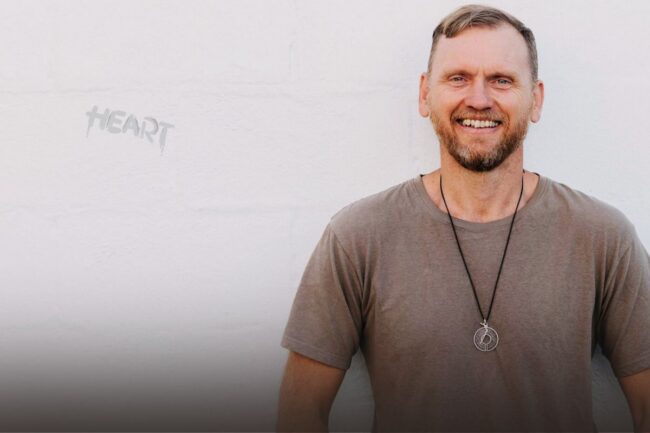
#192 In this episode, Guy interviewed Jan Philips, an accomplished author and spiritual guide, about the evolution of spiritual understanding and personal responsibility. The conversation delved into the shift from external religious authorities to recognizing our own creative power and responsibility. Jan shared personal anecdotes, including her journey from feeling marginalized to finding spiritual fulfillment. The discussion explored the importance of a consistent spiritual practice, the role of imagination in creativity, and how personal experiences shape our perspectives. Jan emphasized the need to connect with the ‘invisible forces’ through solitude and silence, and to act on what breaks our hearts in order to make a meaningful impact in the world.
If you enjoyed this podcast, you may also like: Finding Courage To Change & The Side-Effects Of Kindness | Dr David Hamilton
Subscribe On:


About Jan: Jan Phillips is a thought leader, award-winning author and dynamic speaker. She is co-founder and executive director of the Livingkindness Foundation.
Jan has worked in 23 countries presenting keynotes, workshops, and retreats. She creates a unique multi-sensory experience, weaving humor, storytelling, video and music to inspire and ignite insights for life-changing action. Jan shows people how to access their wisdom, activate their creative energy and communicate with passion and power.
Her own quest has led her into and out of a religious community, across the U.S. on a Honda motorcycle, and around the world on a one-woman peace pilgrimage. Blending east and west, art and activism, reflection and ritual, Jan’s presentations are transformative, uplifting and soul-stirring.
►Audio Version:
Key points with time stamp:
- (00:00) – Mystic REVEALS the New Spiritual Awakening Beyond Religion!
- (01:22) – Welcoming the Guest: Jan’s Journey
- (02:07) – Exploring Spirituality and Creative Responsibility
- (07:34) – The Importance of Daily Spiritual Practice
- (10:44) – Jan’s Personal Struggles and Triumphs
- (13:47) – The Power of Nature and Human Connection
- (22:47) – Lessons from Arthur: Breaking Down Barriers
- (32:11) – The Role of Spiritual Practice in Modern Life
- (46:08) – Jan’s Latest Book and Final Thoughts
Mentioned in this episode:
- Still on Fire, Jan’s latest book
Jan’s Website:
janphillips.com
Jan’s Books:
janphillips.com/shop-cat/books
About me:
My Instagram:
www.instagram.com/guyhlawrence/?hl=en
My website:
www.guylawrence.com.au
www.liveinflow.co
TRANSCRIPT
Please note, this is an automated transcript so it is not 100% accurate.
Jan: [00:00:00] People have been taught that the God out there is handling everything. I think that lets us off the hook. There was a, a mystic who said, a religion of the earth is coming in now to take over for the religion of the heavens. The new spirituality that’s coming into focus now is one that would have us understand. The nature of our own creative ability and responsibility. Why are you resisting your whole life opening up?
Guy: The episode you’re about to watch has been republished. My podcast channel reaches a lot more people now and there’s certain episodes that have slipped under the radar and I wanted to bring them up for your attention ’cause I truly feel they are worth listening to. So please be sure, let me know where you think of this episode in the comments below.
And of course, let’s continue to connect. Let me know where you are in [00:01:00] the world and where you’re listening and tuning in from. Uh, I love reading it. It’s amazing, isn’t it, that we can do this. And the other thing I wanna say as well is find out where we are. If you wanna put your spiritual boots on and come and join us at one of our five day retreats or one day events around the world, links are below as well. If you wanna find out more what we’re up to. Much love from me. Enjoy.
Guy: Jan, welcome to the podcast.
Jan: I’m so happy to be here with you. Thank you, Guy.
Guy: You’re very welcome. I, um, just checking out your work earlier. I, you seem a very busy woman. It’s quite incredible. Some of the things you’ve achieved. I was looking at, I think it’s your 11th book as well. You’ve written, which always blows my mind when, uh, people.
Uh, produce and do these things, you know, you’ve traveled the world, you, you’ve run retreats, workshops, events. Um, so, and this is why I’m going to start with this question for you. Cause I love to hear what people say is that if you were at an intimate dinner party and [00:02:00] you sat next to a stranger and they asked you what you did for a living, what would you say?
Jan: I would say I work, I play, I pray, and I serve, and I’m a servant of the unity. So everything I do, all my books, all my workshops, all my retreats are in the service of unity, which, which in real life terms means I help people to put their dualities together. And come to a higher understanding of the oneness that we’re part
Guy: of.
Jan: Sounds a little tricky, but it’s not.
Guy: What’s your typical response? Do you find yourself, you’re just around people that are searching for those things? Or do you find people are just, Um, closed off to these things, [00:03:00] open to these things. What’s been your experience?
Jan: It’s about both, I think. Because in my own family, you know, I come from a pretty big tribe, so I have, say, 65 first cousins. I would say, Out of those 65, there may be eight to 10 who would be at all interested in what I do or consider themselves on an evolutionary spiritual path. So I don’t know what proportion of the people that is. I have a brother and a sister, and I’m the only one that does this kind of work and has this kind of focus.
I think that’s why we’re in trouble globally is because people have been taught that the God out there is handling everything. I [00:04:00] mean, we sing a song, He’s got the whole world in his hands. And I, I think that lets us off the hook. and that the new, I think there’s a big distinction between faith and religion, but the new religion or the new spirituality that’s coming into focus now is one that would have us understand the nature of our own creative, uh, ability and responsibility.
So that’s what I stand for. Um, I think it’s a prophetic message because it hasn’t landed in the public’s imagination yet. So that, you know, I’m not saying give up God. I’m just saying elevate yourself. to the status of sacred and see that we have from our [00:05:00] imagination inward the ability to create. I mean, we, you and I created that we’re sitting here today that we’re going to have a 45 minute long conversation and that you’re going to broadcast it out to the world.
We created that. And now. We know that we’re going to be influencing people’s thoughts. So, that’s not something God is doing. That’s something we are doing. And, you know, Jesus, he’s not my only master teacher, but he’s probably the primary one, said, I and the Father are one. He’s one with that great force, and he says, Anything you see me do, you can do and even more.
So my interpretation of that is we’re the same as Jesus was, and he did miraculous [00:06:00] things, or maybe not miraculous, just surprising and ultra human. But that we’re capable of that too. So that’s what I’m going for.
Guy: I, I love it, Jan. I love it.
Jan: Yeah,
Guy: yeah, yeah. You know, it’s fascinating. And this conversation comes up quite a lot of my podcasts because, um, uh, you know, I was somebody that was not brought up in any, any religious shape or form, and I didn’t never had any kind of structure and I never really, uh, questioned the larger reality, if you like, the, the, the universe itself and why we’re here and all these things.
And, um, but, but a series of events, I guess, led me to having to flip the, the, the camera lens back on myself and start to look within for answers as opposed to looking externally all the time. And, um, but it took me a long time before, before I kind of started [00:07:00] to get there. I’m my, my genuine concern is at the moment is then having some experiences to, I guess, reinforce a new belief structure within myself and who I am and what I’m actually capable of.
Looking outside in the world today, I feel so many of us are still very disconnected because there’s so much fear. There’s, there’s so much, um, uncertainty going on. How do we start to then, in your, your view, how do we then start to get back to connect back to that deeper aspect of ourselves?
Jan: Well, this is the part that’s so weird because it’s very, very easy. It doesn’t require money, luck, good looks, or a particular sex or gender. It’s totally accessible, but the experience relies on us making a time commitment to take the call. [00:08:00] Right. So every day I say every day, if you really want to have the extraordinary life you came here to have to understand the purpose of your life to be ensconced in the passion of it, then you have to make a commitment to have a relationship with the invisible forces.
And. What that means is that you set aside time, that you sit in silence, because they don’t speak our language, and that you just let yourself imagine you’re being communicated to. It’s like the trees.
And eventually, you can distinguish the communication from the voices in your head. And it happens more and more consistently, [00:09:00] more and more profoundly, and your life opens up. The flower, like the bud flowers. And people will say, oh, I don’t, I don’t have time to meditate, they say. I, I don’t even put a word around it, like meditate.
I just say, shut up and say hello and just acknowledge, you know, every morning I light my candle because I, I don’t do close eyed silences or meditations. I like the candle and I stare into the candle cause that to me represents the great mystery. So I started out in 1990 doing it just for 20 minutes and now.
I’ll do it. I don’t know. I might be there 40 [00:10:00] minutes, 50 minutes because I’m aware of the privilege and the opportunity and the magic of how communion works with creation itself. I don’t feel like, I feel like I’m a satellite dish to mind at large, to supreme intelligence. It saturates me, it penetrates me, infuses me, and informs me. And so, I would never let a day pass where that’s not part of my day.
Guy: Yeah, beautiful. Why 1990? What was the driving factor then for you to start?
Jan: It was because I, my, I had just started graduate school and my life was kind of falling apart because I was in my forties. I wasn’t jiving with the [00:11:00] 20 year olds that were there. And I was there at the behest of a good friend of mine. She’s a nun and very intuitive. So I call her my psychic nun guru. And she’s the one that suggested I go to grad school.
So when it came time for me to say, I’m going to quit. Because it wasn’t joyful enough. I called her up to say, I know you had a, what was a good idea, but it’s not working for me. So I wanted you to hear it from me that I’m quitting. And her response, she asked me three questions in response. They were, are you eating and drinking moderately?
Do you have a spiritual practice? And how are you taking care of your body? I didn’t have one good answer to any of those things. My life was totally out of balance. So she [00:12:00] said, before you quit grad school, begin a spiritual practice. Start exercising your body. And start eating and drinking moderately. So that’s what happened.
I went out and bought a bicycle that day, started riding my bicycle to school. I started having a plant based diet, only drinking wine on the weekends. And my spiritual practice was exactly the same as what I did this morning. candle on the tv at the end of my bed was what it looked like in 1990. Now I have a whole little altar set up.
So I was resistant to it because it was like, I don’t want to have a spiritual prep. What does that mean? How do you do it? I had done meditation. What do you call that? TM [00:13:00] meditation in the seventies. I didn’t find that satisfactory. I’d been in the convent for two years and we had to meditate all the time, but that was just the perfect environment.
It was a gorgeous chapel. It was always silent. It was ready made for success. So it was a departure for me to, in the secular world, develop a spiritual life, but I was committed to it because I did trust her, and I’m committed to my life being extraordinary. Hence, I’ve not stopped doing it. In fact, I do it more and more all the time
Guy: beautiful. I um, you know thinking about that what was coming into me Um, then was um, because I watched your tedx talk recently and you talk about the the 100 watt light bulb We’re born like this [00:14:00] radiant bright light When we when we come to planet earth and and over time Culturally and and everybody else’s opinions.
It’s kind of I guess dims our light You That’s within us. And, and I was thinking about that very thing when you, as you were sharing your, how you, you got into your practice and what, what really struck a chord with me researching you, Jan, was that you spoke about, um, you know, you were contemplating suicide, but the, by the age of 12 and.
How much do you think that has all morphed into allowing you to have this spiritual expression these days? What happened? Did you have to go through that to then, I guess, be as committed as you are now, because quite often we hear of people having their own traumas and their own difficulties before finding this work. Do you think that needs to be the case? There’s quite a few questions in there, so [00:15:00] I’m just going to open it up
Jan: to you. I don’t know that it, I don’t know that it needs to be the case. I do think that our wisdom comes from the turbulence that we accept and process and recover from. So for me that I was 12 years old and suicidal was because I realized then in puberty that I was homosexual. And there were no kind words for that phenomenon. And back in the mid sixties, it was awful. Let perverts, queers, lesbians, bull dykes, faggots, that’s all you ever heard. And every message you got from movies, culture, TV, your parents. The church, the nuns, was it hardly anything is worse than a homosexual and that [00:16:00] it’s a terrible sin.
So I was a very, uh, good Catholic. I believed everything. And so I believed that really hard. And believing it meant, uh oh, I’m such a terrible person, I was made wrong, this is wrong with me, so I’m just gonna kill myself. And so, I was saved by my sixth grade nun, who recognized, she didn’t know why I was in trouble, but she knew I was looking very bad.
Sad and depressed and no vitality. So she started this campaign of positive reinforcement. She got my mother involved with it. So for a couple of months, the two of them spent a great deal of energy [00:17:00] affirming me and applauding me. And one day it happened that the little sad caterpillar flew off in butterfly form.
And when that happened, I made the connection, Oh my heavens, nuns have some kind of magic wand or superpower or I want to be one of them because they do magic. She saved my life. And so I decided then at age 12, I would become a nun and that never wavered. And So I went off to become a nun at age 18, and I was there two years.
And then they figured out that, yes, it is true, she is queer, and we can’t tolerate that. So they sent me home after two years, which to me was the worst, [00:18:00] let’s say, trauma of my life. Which took 20 years to get over, which
Jan: I did, but I think that has been contributing to my, to the magnitude of my life that I worked so hard for all those years to reconcile. That terrible rejection and disappointment. And my, my life is turning out to be a magnificent experience and opportunity for me to be a voice about the difficult things. It’s why I have 11 books, because every time I encounter what people are saying, I can’t do this, I can’t do this, because usually it’s because of cultural, religious messaging, and it’s, [00:19:00] people are just permeable to be, they allow, we allow ourselves to be Covered up to have our light be our light bulb be covered up by the debris of other other people’s bad thoughts.
It’s like we were walking through a dust storm and we’re not protected and we come out covered with dirt. So the metaphor of thinking of ourselves as a hundred watt bulb means we have to consciously like get, clean ourselves off, make sure we’re operating from our own original thoughts and not from thoughts that we’ve accumulated or inherited from any other authority but ourselves.
Guy: I think you used the term infosynthesis. Is that correct? [00:20:00]
Jan: I did use that term.
Guy: Yeah.
Jan: It’s a term that, its partner term is photosynthesis. And I think humans experience infosynthesis. And if you take a tree, how does photosynthesis work? They do magic because they take nothing and convert it into food, sugar, chemicals, everything that the roots, the branches need. The tree converts Sunlight and moisture into food, because they have a magic ingredient. The magic ingredient is called chlorophyll, and that allows them to do that transformation of, of nothing into something, of air and sunlight into food and nutrients. So, and I think we’re nature. So, when I [00:21:00] think, oh, the trees do it, the plants do it, called photosynthesis, we do it.
How do we do it? Well, human beings take in information, right, and we convert it to inspiration. I convert to inspiration. I have music, I write songs, I sing, I have CDs, I write poetry, so I convert the information that comes my way through experience or reading or whatever. And my magic ingredient, my chlorophyll, is called the imagination.
So everything I do, every book I write, it’s just a conversion of what’s happened to me And I make sense of it, and I give it back to you in a beautiful form, and that would be called creativity, but [00:22:00] it’s what we’re all doing all day long. Most people don’t even do it consciously, but I do it consciously.
Guy: And we begin to select the thoughts that we want to hang on to. To, to then create from that place, which can be challenging, especially if we’re not looking after our body, like you mentioned earlier, you know, if we’re, we’re, we’re not exercising, if we’re not moving, it can feel like gravity gets heavier and heavier sometimes around.
Yeah. I’m, I’m curious as well that, um, cause you talk quite a lot about beliefs and, um, and I was sharing an interview with you. It was quite an old one. And, and I’d love to touch on this as well, because I think it’s very poignant to what’s going on in the world right now, where you, you shared a bit of a story that you, um, were doing [00:23:00] interviews on people’s values, I think in a small town and.
You, you were quick to put people into a box and pigeonhole a belief if they’re not actually fitting into your belief structure or paradigm. I don’t know if you can recall the story that you were talking about with the gentleman you want to interview and you never wanted to interview him because he had all these magazines sprawled out to the table.
Jan: Because he was a right wing Jan Birch staunch conservative. racist guy in the South. And I was at his house to interview his sister, who was the mother of one of my friends. And so while I was there at the homestead in Pineville, Kentucky, Arthur, the man, comes home. I’d already seen his, [00:24:00] his space in the house when his sister showed me around the house.
She said, this is Arthur’s It was a living room. That’s where I saw all the Jan Birch materials, all the stuff about guns, all, all the just materials that made me feel not safe, not loved. Like this guy certainly would not appreciate that I was gay. And so I had categorized him as don’t want to spend any time with him.
So I had. I was done interviewing, her name was Babe Logan, I was done interviewing her, and then Arthur comes in the house and he says, when will you interview me? Which made me feel like I can’t just say, no way, Jose. And I [00:25:00] looked over at Babe and I go, she goes, well, stay overnight and do him in the morning.
So I did that. I stayed overnight. At 830, Arthur tells me meet him outside on the front porch. We go there. I have my little pad and paper, I’m all ready as a journalist to do an interview. And he just stands up and he goes, follow me. He’s got his little walking stick, his little hat on. So he starts walking around the yard, pointing out things with such verve, with so much love and vitality.
I remember him pointing over to the black walnut things that had fallen off the tree. And he points his cane over there and he goes, look at them walnuts over there. How does it happen that in a short period of time, [00:26:00] those nuts become so hard. I can’t even open them with my hand. I have to have a hammer or a tool to open them up.
And when you open them, look what’s inside the richness that’s inside. What power is loose in the world? He’d say powers loose in the world. Then he’d swing around to where he’s got garden with these corn stalks growing. He did the same thing about corn. Cause you open up that stock of corn. What are you going to find?
You’re going to find row after row of golden kernels all lined up. Perfectly, like a miracle, powers loose in the world. And so now his reverence for nature, his reverence for life itself, his own vitality is just like being [00:27:00] exported out of him right into me. And I fell in love with Arthur that day. And so that little box that I had put him in disappeared and tell the truth.
I stayed for the next three days. because he wanted to show me the whole land. And so we basically got very, very close because we were outside in nature in his woods for those three days, very intimate understanding of of the natural world and how sacred it is. And he confessed to me before I left. He said, here I am 87 years old.
I love the trees so much, but I never made it to the Redwoods. And I said, Arthur, you’re only 87. There’s still [00:28:00] time. Get on a bus. You can go to the Redwoods. He says, no, I can’t go. I’m too old. I let it pass me by. So I left and then, and I was only, only going to small towns. And so I would always go to the drugstore.
I’d go to the card section. I’d look for a card that had a tree on it. And I’d send it back to Arthur saying, Dear Arthur, it’s not too late. Get to the Redwoods. And so he probably got 12 or 15 of those cards from me because I was on the road
Guy: for
Jan: three months. Right. And then when I get back to Syracuse, New York, I go to pick up my box full of mail from the post office. And on the very top is a postcard from the Sequoia. National Forest, where the biggest trees [00:29:00] in this country are. And it was from Arthur, and he said, Dear Jan, if it hadn’t been for you, I’d never be here today. I love you so much. Thank you for helping me. So, he got to see the sequoias and the redwoods, and he lived to tell about it. So, that’s, you know, that’s how we help each other.
Guy: It’s a beautiful story. And what do you think is the lesson from it, for everyone listening? Because I think, especially in this day and age, it’s so polarizing. There’s so much division. And we’re very quick to
Jan: Yeah, let’s just put myself in the shoes of, well, you know, some people here call them Trumpists or Trumpers. [00:30:00] Let’s just say I was the Trumper back then who had an opinion about Arthur who might have been the liberal or progressive that the Trumper didn’t want to experience. I don’t know what it was that caused, you know, there’s some kind of outside grace.
that arranged for the circumstances to be different from what I had decided, because I had decided I don’t want to talk to this man,
but he wanted to talk to me. So we made that possible. And as a result, whatever polarization Existed between us on my side was my own projection of his how different he was from me. I can’t speak for him, [00:31:00] but he didn’t like gays. He didn’t like liberals. He didn’t like pacifists. I was in all those categories.
So I knew based on his politics that if he knew those things about me, he wouldn’t be so friendly, but grace occurred and led us into mother. into nature and there we fell in love with each other. So I think there’s a couple lessons in it. One is be careful who you lock your gate on because you might be keeping out people that are very lovable. And I think the second one is Never forget, you can help somebody achieve their dream [00:32:00] that they wouldn’t be able to accomplish on their own.
Guy: Beautiful. You, um, I, I’m keen to explore this area a little bit more ’cause you, um, even in your latest book you used the word mystic and spirituality and, um, I found in my own journey. Um, that for a while it was, it was very much just philosophy. I was just reading and slowly leaning in and then, um, there was some definitive points, I guess, where the embodiment of the work was the greater teacher than the philosophy of the book or the podcast or the, or the listening to.
And, With somebody like yourself that, you know, clearly had some trauma, like you said, you had a very traumatic experience at 21 when you were asked to leave, you know, from being [00:33:00] suicidal at 12 years old. Was there a period of time where you felt Um, I guess been blown around in the wind and was it a definitive point where that embodiment, where that knowing started to really coming to your life so you could then make strides moving forward? Or was it just a gradual progression over time? I’m curious.
Jan: I think on this, on the spiritual level, Um, yeah, I was blowing around in the wind probably for at least 10 years from kicked out when I was 20 and found my path when I was in my 30s or 40s, maybe 49 to 99 in my 40s. So I spent a lot of time [00:34:00] adrift spiritually.
I was a political activist, social activist, feminist, gay activist, did a lot, you know, marches. I’m a photojournalist, so I covered all the demonstrations. It started out being the anti nuclear work. My trip around the world was, you know, anti nuclear. So, It wasn’t until I encountered Sister Paula who said you have to have a spiritual practice or your life will never work.
So, say, 89, 1990, when I, the very first week that I started my practice, I experienced great luck and a great reward because I felt someone talking to me. And [00:35:00] I had a journal by my bed and I wrote down Some phrases that I felt were being transmitted and some of those words just became a song very effortlessly. And within the first, say, six months of my spiritual practice, I had written probably five or six songs.
Guy: About
Jan: the spiritual experience. So to me, there was that great gift was a big encouragement for me. You know, it could have been otherwise. And I’m not saying under seven days a week, that great things happen in every meditation. I mean, every [00:36:00] other day you sit there and nothing happens, right? There’s constant distractions and nothing may happen. But the thing that’s important is you’re there, you say, hello, I’m here.
You’re the sat, I’m a satellite dish for you. Come in, come in clearly. However, it is, you know, it’s not churchy to me. I don’t have, you know, relics on my altar, but I do have symbols of earth, air, fire, and water, you know, I think. There was a mystic who said the a religion of the earth is coming in now to take over for the religion of the heavens.
And I think that’s what’s true that we all learned Moses, [00:37:00] Abraham, Jesus talked about heaven, you know, and that was at a time when people thought the earth was flat. And And the theology at the time, you know, had different stratospheres, you know, they could draw where heaven was. We stand here and then there’s the air and then there’s heaven and the clouds.
So you end up with the Sistine Chapel representing what heaven was. Looks like God on the cloud. Everybody can probably has that image in their head from seeing it somewhere. God on a cloud, the beard, the angels, et cetera. But I think it’s the job. Of us as evolutionary creators, conscious creators that we’re now co creating the universe.
Initially, it was just the universe being created, the unfolding [00:38:00] of divinity. But now humans have evolved and we have consciousness and we have power and authority. And so my town looks like it looks because I’m in it. You know, I make a dent in San Diego, what, you know, your place. Your community, it looks like it looks because you’re in it.
A dinner party that I attend is different from a dinner party that doesn’t have me at the table because we have agency. We say things of consequence. We help people become more creative and understand their own gifts. And so to me, the spiritual practice moves us closer and closer to that sense of union.
With the very thing we can’t touch so that my perception now [00:39:00] of divinity is the air. I breathe in the air in my lungs in the oxygen in my blood. That’s how close the whole shebang is to me. I’m like a particle to the wave of it. Particles. You can see waves. You can’t see, but energy is one or the other simultaneously and it goes back and forth constantly. So when you can see it, it’s like. It’s us. And when you can’t see it, it’s God.
Guy: Hmm. What a beautiful explanation. What do you feel then, might be, it’s a big question, but not, I guess, is our, our purpose of being here then on earth?
Jan: I think our purpose of being here is to understand the, our responsibility that we’re co creators. And that the phenomenon of life on earth is in our [00:40:00] hands. We’ve got the whole world in our hands, right? It’s not somebody outside. It’s us, we’re responsible now for the ozone. We’re responsible for the mess in the ocean. We’re responsible for the rivers being polluted for the, the water in Flint, Michigan, killing people.
You know, those are, that’s our industrial outputs, right? And so I think that for us to stop abdicating power and saying God’s overseeing everything. It’s what we’re here for, that we’re, you know, the flip side of God going back into its godness. We’re just, divinity is materializing in us, and we in turn divinize [00:41:00] matter. So it’s one cyclical thing. That’s, that was kind of how Teodai shared and, described it.
Guy: Yeah. Are you, how do you feel about the future with everything that’s going on right now? And are you optimistic?
Jan: I’m glad I’m 72. I’m glad I’m not just starting out. I, I fear and have concern for the children who are already anxious and fearful. But the only thing that saves me is every day. I do something to make the world a better place. And so, that’s all I can do. You know, it could be just reach out to someone with a phone call.
You know, I have a foundation, I give [00:42:00] scholarships, I organize programs, I, I do anti racist work, right? We all have to just tune in to what am I here to do? And I think the answer comes from what most breaks your heart open, right? If you say to me, oh, it’s the whales, or, oh, it’s killing of the porpoises, or, oh, it’s the puppy factories.
Then I say, then go there and do your work there. For me, it’s the social problem of racism that our country is founded on and grounded in, and white people are so resistant to. learning about, acknowledging, and doing anything about our role in it, because black communities cannot do it by themselves. It takes a massive number [00:43:00] of conscious white people to work together to solve this problem.
Guy: Yeah, yeah. I, yeah, I, I personally, I feel, I don’t know whether it’s because my eyes are more open than they were five years ago or 10 years ago, but, and I’m, Biasly seeing through my lens now, but, um, I, I do genuinely feel more and more people are gravitating to this work and wanting to learn more and, and explore these options. You know, the, the, the role of consumerism, especially doesn’t seem to be as fulfilling. I don’t know, maybe, maybe I’m seeing it through rose colored glasses. I’m not sure.
Jan: What was it that got you on the path?
Guy: Pain. Pain. Um.
Jan: That’ll do it, won’t it?
Guy: Pardon?
Jan: That’ll do it.
Guy: Yeah, it would. It was, it was a very slow burning [00:44:00] loneliness. Um, but at the end of the day, I, I, there was something strong enough in me not to settle in the way that everyone was kind of conditioning me to be and become. But from breaking away from that, it led to a great deal of unhappiness, because I knew I didn’t want that, but I didn’t know what I wanted either.
I just never felt like I fitted in for a long time. But once I opened my heart and really started to connect back to that and start to understand The words in the work that I was actually reading, um, it, you know, things, things changed very quickly for me. And, um, actually, um, a lot of courage and confidence came from that.
And then I guess, realizing who and what we really are and allowing that aspect of ourselves to express ourselves more on a daily basis and overcome the old beliefs, the paradigms that the things that were there and understanding that more. And I will say, Jan, as well, [00:45:00] you know, I’ve, I’ve been, I’ve been podcasting since 2012 between my last company and this one, and I’ve probably spoken to over three, 300 people, 350 people of experience like yourself.
And every time I sit down with someone, I, I learn something new. I, I always come in with a beginner’s mind and it’s astonishing what, uh, how that’s impacted my life as well, you know? So it’s, it’s wonderful. And you know, what resonated with me with what you shared then was that, um, you know, where, where the pain is in your heart, if you follow, you know, what breaks your heart and start to lean into that.
For me, it was once I had these realizations is that other people don’t realize their own potential. And that was what was really getting to me, hence why I started this and following that. And by doing that, things have continued to open up for me. So, [00:46:00] yeah, it’s been, been very special. Um, I got a couple of questions for you before we wrap things up. And one is with your latest book, um, still on fire. What, why did you write this book? It’s your 11th book, and what are your hopes, um, to come out of it?
Jan: Well, there’s two major things. One is the subtitle is Field Notes from a Queer Mystic. So I wanted to speak from the experience of an outsider. Who’s been marginalized and criticized and hurt by many institutions along the way.
Because I have nothing to lose now, and there are plenty of LGBTQ people who have a lot to lose, starting with their lives. by coming out. So that [00:47:00] was one to give the perspective of a person who’s a good person, social activist, doing good work, was in the church, did become a nun, and has left that all behind in order to be the one who experiences the great mystery and speaks from the perspective.
of present to this, not just yearning for it. I tell everyone I’m not a seeker. I’m a finder. So I have found what I was looking for. And so the best thing that this What this book can do for the reader is, one, help them figure out how to get disentangled from religious doctrine that they’ve inherited that might be hurting them, or constraining them, or keeping them from their own authentic experience.
That’s what this [00:48:00] magnitude. So that’s one thing because religions try to keep us small. You know, families try to keep us small. Basically, it might be that they want to protect you. Like, when you, when the kid comes out to the parent, the parent might go, Oh no, the kid might get killed. She’s going to suffer terribly.
Let’s, Keep her in the closet, right? Let’s tell her, change that plan, become something else. It’s their, you know, their fear of very real danger, but it’s never helpful. So it shows all the steps in the inside, the bottom side, the underside of all the decisions we need to make. in order to rule out that other people have anything to do with the direction of my life.
So I think it’s very [00:49:00] valuable. It’s not just for LGBT community. I think it even offers more to people who are not gay because They have never had this experience and they’ve never been able to look at it from the inside out. So my feeling is just like when I read books like about white privilege or racism, the caste system, caste was one of those books.
I mean, I’ve got like eight or 10 books on my bedside stand now that have me become aware of racism. Because I’m hearing from Black voices who are guiding me into experiences that I never had because the privilege of my white skin. The same would be true for queer to guide the reader into an awareness of how [00:50:00] frighteningly dangerous this life has been and continues to be for people who are on the margins, like LGBTQ people.
Guy: Yeah, yeah. No, thank you for sharing. I, you know, it’s, I think, I think in, in some ways we all feel a bit like, um, outsiders if we, and don’t fit in it depending on our upbringing and, and what we’ve been doing. So, you know, I, I, like you said, I think it will relate to a lot of people. I, um, I got one last question for you to wrap up the show that I ask everyone on the show. And that is with. Everything we’ve covered today. Is there anything you’d like to leave our listeners to ponder on?
Jan: Yeah, most importantly, I’d like them to ponder on. Why it really, why are they not true to a spiritual practice? [00:51:00] Really explore what keeps you. Cause even if you set aside five minutes a day, let’s just say five.
I said 20 for me, but say five and just the only rules are solitude and silence. Don’t have your puppy there. Don’t have your toddler there. And, and light a candle cause that could help. But really, if you have a resistance to silence and solitude, and, and the chance that you might actually hear heaven breaking loose for you, then something’s wrong. And I think I encourage people to go down into that to see what is that fear about? Why are you resisting your whole life opening up? The end. [00:52:00]
Guy: Now a beautiful and a beautiful place to end the conversation on Jan. Uh, thank you for sharing your wisdom and all that you do and um, And I have no doubt everyone listening today will get something out of our conversation and for anyone listening as well Uh all the links if you want to grab Jan’s book or find out more about Jan Um, it’ll all be in the show notes, whether it be on the podcast or YouTube, it’s all there just below, uh, whatever platform you’re having it on. So, uh, be sure to go and check Jan out. So Jan, thank you again, my lovely, it was a honor chatting to you and I appreciate being able to share this with everyone. Thank you. All
Jan: right, Guy. I look forward to the link. Thanks. Bye now.